Author: Gemini, Shenchao TechFlow
Since October, the crypto market has experienced a significant cooling-off. Along with the correction in US stocks and rising macroeconomic uncertainty, BTC has fallen from a high of about $87,000 at the beginning of the month to around $81,000, with a cumulative decline of about 7%.
As the market price fell and spot ETFs previously saw a single-day net outflow of more than $600 million, market sentiment once again tilted toward panic.
But if we strip away short-term leverage liquidations and emotional selling, on-chain data shows completely opposite capital movements: the truly large funds have not left the market; instead, they are using this pullback to accelerate the accumulation of chips.
Market makers withdraw coins, large holders build positions
When discussing so-called "whale" actions, we first need to abandon the conspiracy theory of "market maker manipulation" and look directly at the physical transfer paths of funds.
The most obvious on-chain feature recently is that a large amount of BTC is being transferred from highly liquid market maker and exchange addresses to cold wallets or new wallets representing long-term holdings.
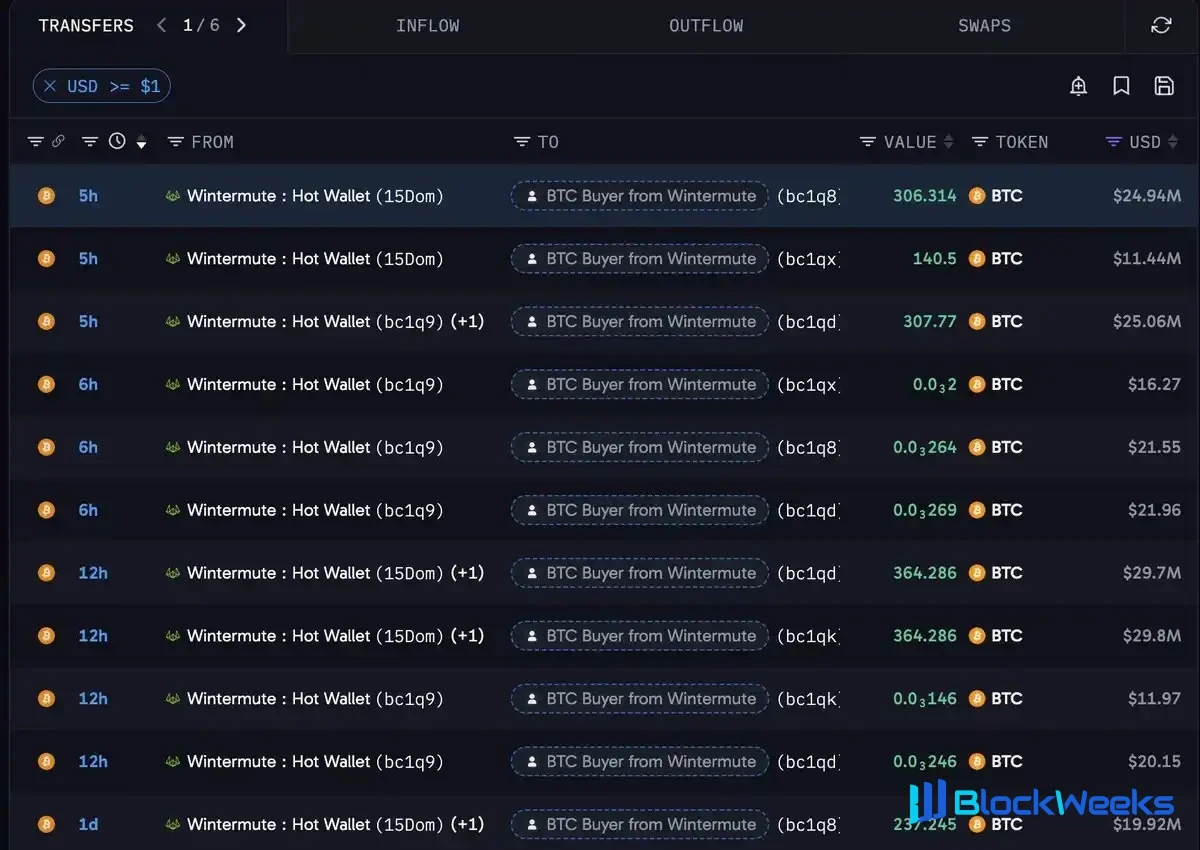
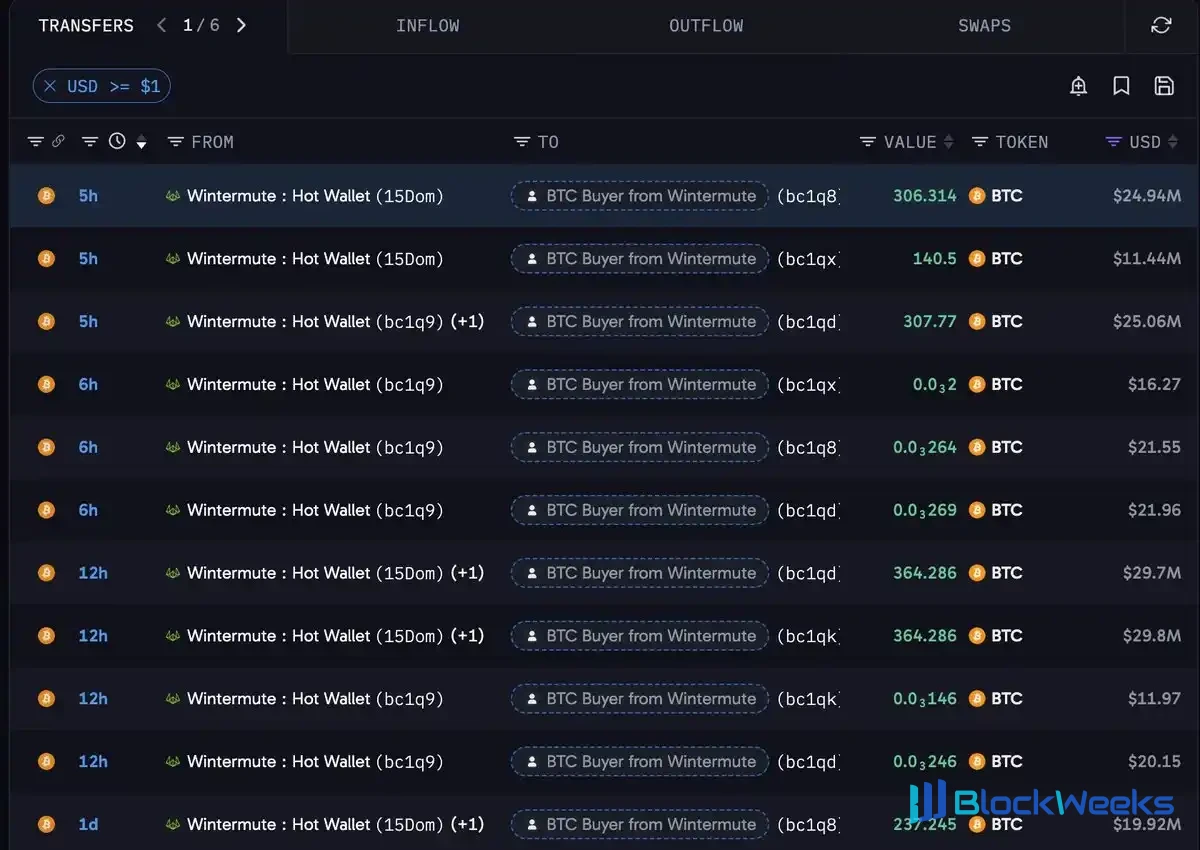
Taking leading market maker Wintermute as an example, according to Lookonchain tracking, since October 1, 40 newly created wallets have cumulatively withdrawn 9,458 BTC (about $770 million) from Wintermute.
In business logic, large amounts of funds frequently withdrawing coins from market makers to new wallets usually means that large over-the-counter (OTC) trades have been settled, or that institutions, after completing spot purchases, are substantially withdrawing chips from the circulating market and converting them into static reserves.
This withdrawal of chips is not an isolated event.
The biggest mismatch in the current market is that ETF outflows and retail stop-loss selling dominate the short-term price decline, but in the eyes of medium and large holders with more than 10 BTC, a 6% to 7% drop looks more like a discount window for spot purchases.
Whale accumulation has now been cross-verified by three mainstream on-chain data institutions, showing the strongest accumulation momentum since February this year:
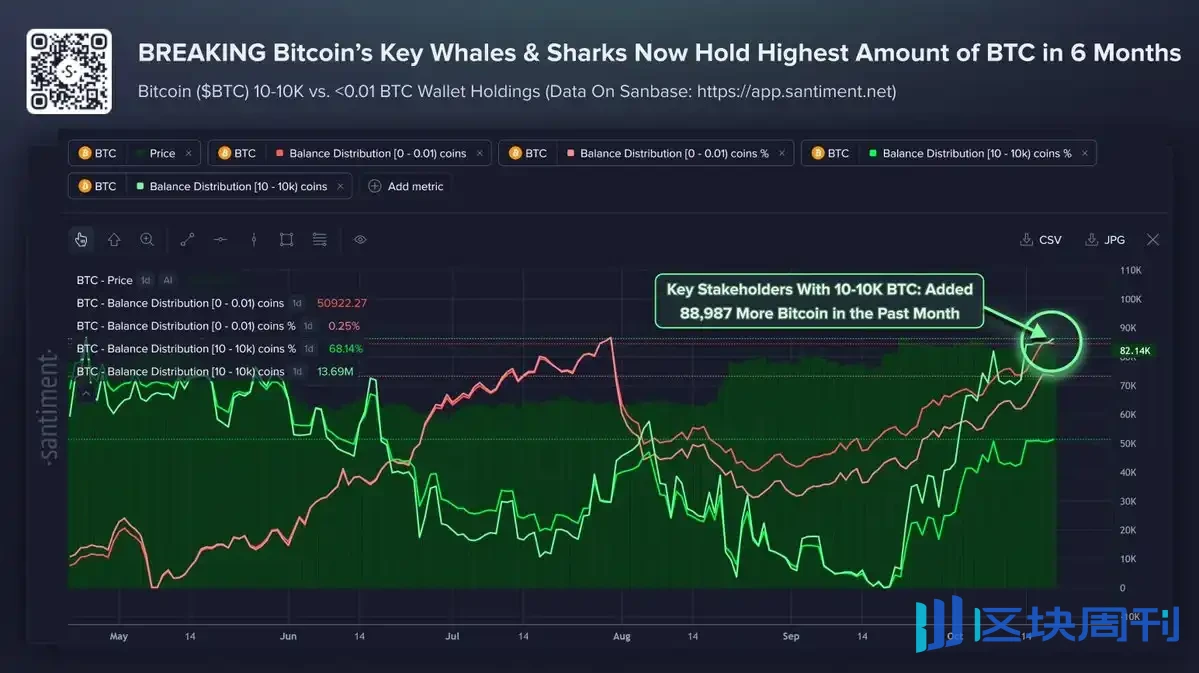
First, medium and large holding wallets hit a 6-month high:
According to Santiment data, the group of wallets holding 10 to 10,000 BTC has cumulatively increased holdings by about 85,000 to 89,000 BTC since mid-to-late September. At present, this group's total holdings exceed 13.69 million coins, and the number of wallets has also once touched a historical high.
Second, the large holders' distribution period has ended and turned to net accumulation:
A CryptoQuant report excluded interference from exchanges and mining pools and found that pure whale holdings have rebounded to 3.03 million BTC, reaching the highest point since November 2025, and the monthly accumulation rate has hit the fastest record since February this year.
Third, large OTC settlements continue:
That is, the more than $770 million worth of BTC spot continuously flowing out of Wintermute as monitored by Lookonchain mentioned above.

Overall, the current BTC market shows a typical "capital-side divergence": panic selling pressure in sentiment and on-chain whale accumulation are happening at the same time. It can be confirmed with high probability that large holders are using this pullback to complete the redistribution and sedimentation of chips.
But it must be viewed objectively that on-chain large holders' accumulation behavior is a long-cycle indicator and has a certain observational lag.
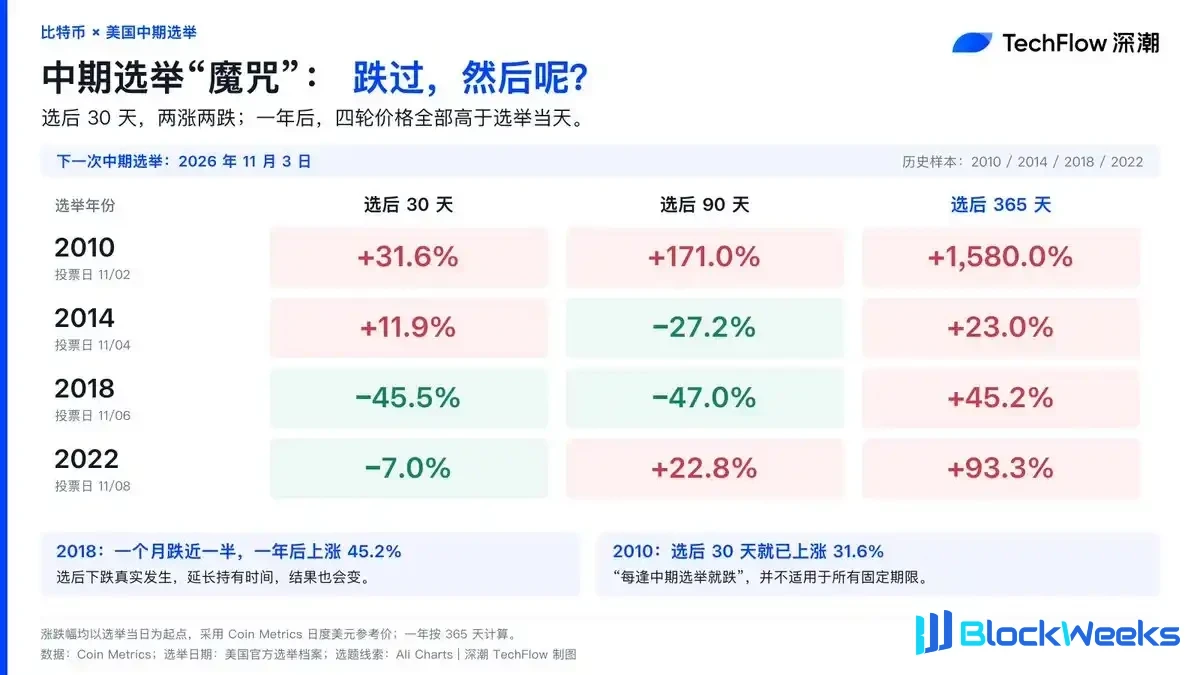
For secondary market traders, large holders' accumulation does not mean prices will reverse immediately. Before the macro靴子, especially the midterm elections, are settled, actual ETF outflows and the liquidation of long leverage may still put downward pressure on prices in the short term.
Follow the whales' perspective for the long term, but one must respect short-term liquidity risks.