News Center

Rethinking Hood Chain in the Context of RWA
 BTCRobinhood ChainHyperliquidstock tokenization




Rethinking Hood Chain in the Context of RWA
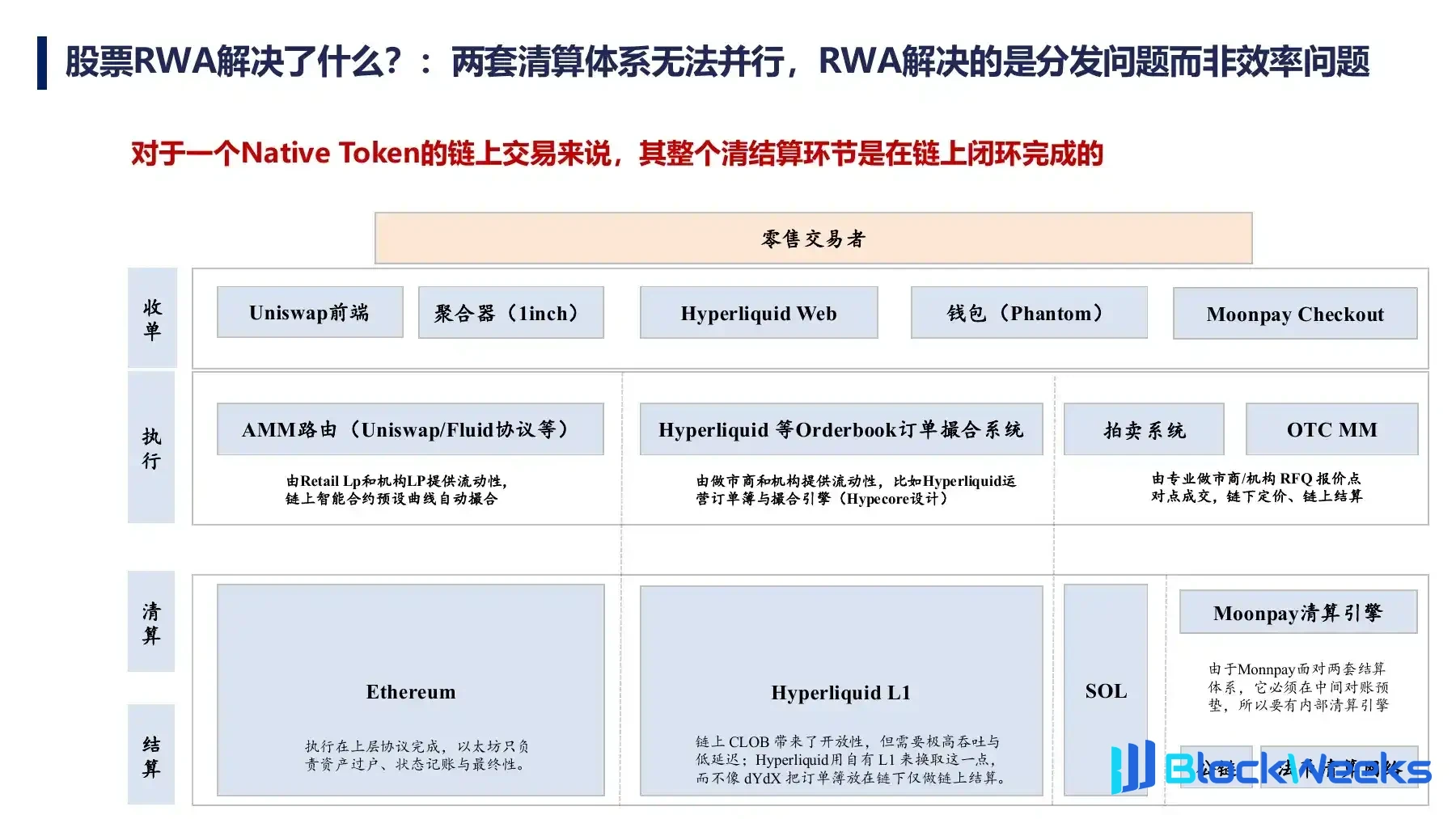
This piece, shared by HB from Zhengming Academy, takes a systematic look at Robinhood Chain against the backdrop of RWA. It first clarifies what RWA means and traces its evolution through 1.0, 2.0, and 3.0, arguing that tokenized equities have yet to solve efficiency problems due to dual off-chain and on-chain clearing and settlement, while stablecoins stand out as the most successful case thanks to their closed-loop settlement. The discussion then examines timing factors such as the decline of crypto-native activity, the shortage of on-chain assets, and the divergence between BTC and QQQ, alongside live debates on fees, taxes, contracts, pre-IPO access, and settlement speed. It closes with a focused look at Robinhood Chain's positioning, strengths, weaknesses, and valuation framework, offering portfolio views on BTC, Circle, HOOD, and Ethereum.
BTCRobinhood ChainHyperliquidstock tokenization4 hours ago
Pantera Capital Tokenization Market Report: Once Assets Go On-Chain, Where Are the Real Demand and Opportunities?
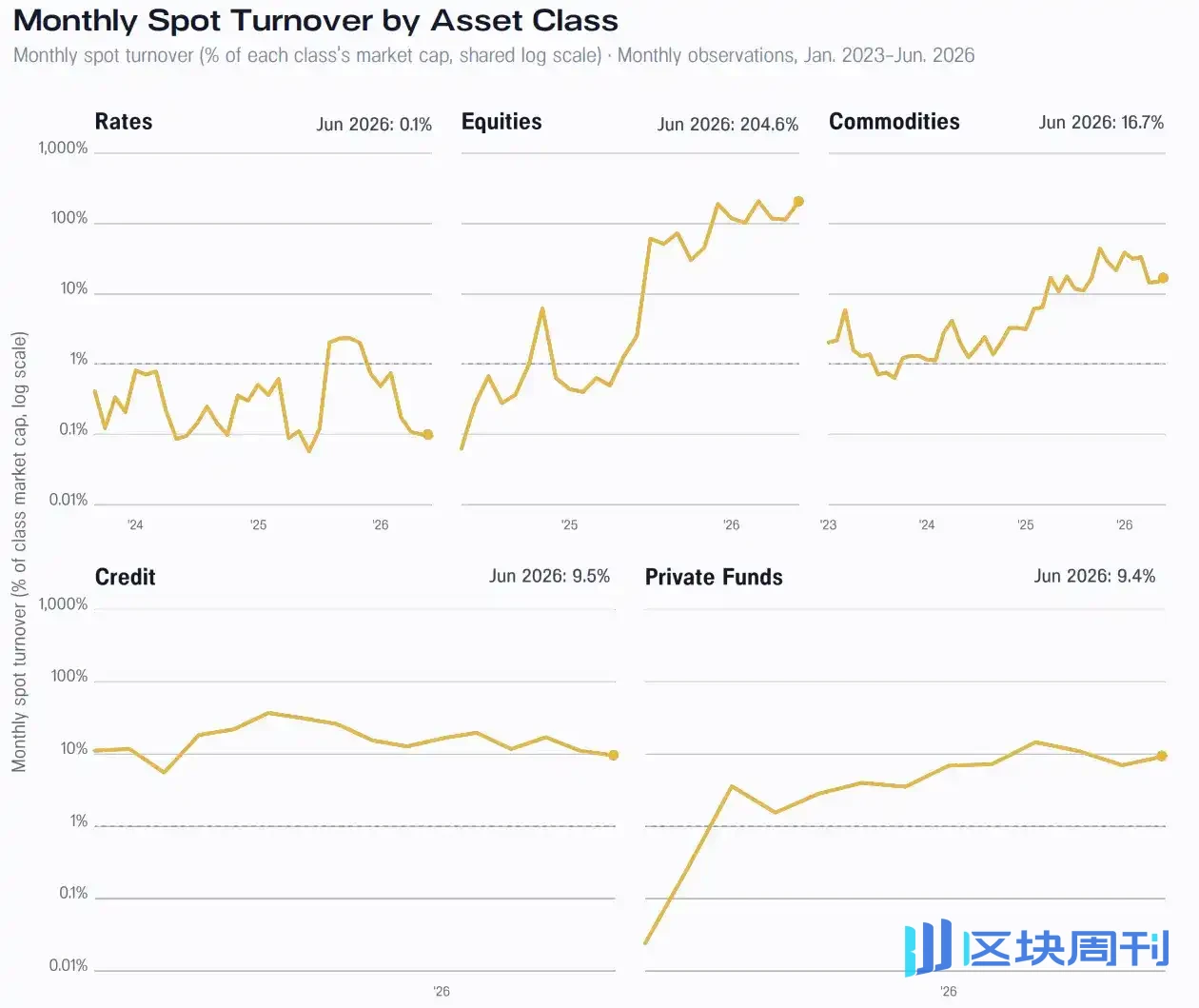
Pantera Capital released a tokenization market report covering 671 assets and a $331.8 billion market as of June 30, 2026, arguing that tokenization is shifting from issuance to building compliant, liquid secondary markets. Open-access products make up 41% of sample value but drive 99.8% of spot trading volume; on-chain equity perpetuals hit $67.8 billion, roughly 16x spot; Robinhood Chain's tokenized asset value grew about fivefold in its first month; and RWA-collateralized lending on Morpho rebounded to $187 million. The report also covers SEC conditional exemptions, DTCC access, and AI agents trading tokenized assets.
 ETHPantera CapitalAI AgentSecondary Market Liquidity
4 hours ago
Polymarket's 2.9 Million Retail Traders: 69% Lose Money, Collective Losses Hit $339 Million
A study of on-chain settlement records from Polymarket reveals that 69.2% of 2.9 million retail accounts are underwater, with collective net losses of $338.9 million. After excluding 4.1% bot accounts, the research finds that traders who lose money are 2.5 times more likely to quit than those who profit. Sports specialists perform worst, while tech and science traders earn the most. The report also notes Kalshi faces allegations of inflating ETH perpetual futures volume, and highlights how on-chain data enables external auditing. Prediction markets, it concludes, are both truth machines and a losing game for most participants.
ETHPolymarketTrading Behavior ResearchKalshi4 hours ago
Wall Street Warns: The Fed's 'Original Sin' Could Send 10-Year Treasury Yields to 8%
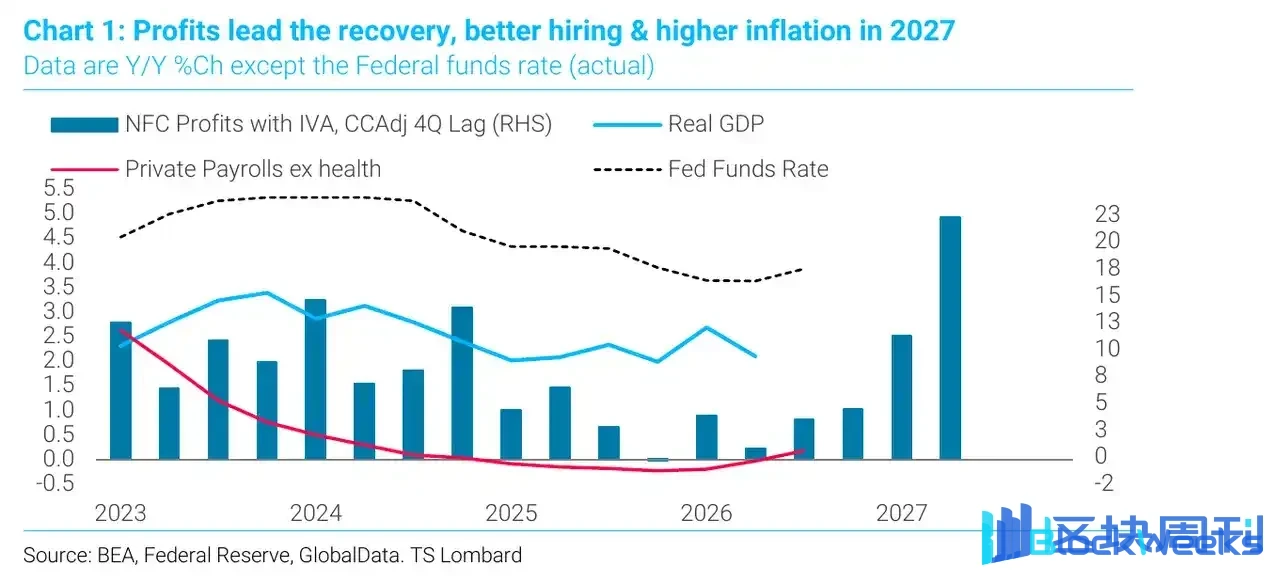
TS Lombard's chief U.S. economist Steven Blitz warns that the Fed's premature easing before inflation is fully contained—its "original sin"—could push 10-year Treasury yields to 8% within years. He argues that the combination of loose fiscal and monetary policy will keep lifting inflation and yield benchmarks each cycle, with swap spreads already pricing in fiscal risk and the U.S. net savings rate at zero. What ultimately breaks, Blitz says, is the market's faith in a return to 2% inflation and the reflex to buy every dip.
4 hours ago
MetaMask Staking Infrastructure Breached? Lido, Ethena and Others Say They're Unaffected | Live Updates
MetaMask Staking (formerly Consensys Staking) has suffered a security incident affecting its non-custodial staking infrastructure. As a precaution, its Ethereum validators on Lido have begun exiting; stETH holders need take no action. Lido, Aave, Ethena and ether.fi have each stated they have no exposure—USDe's backing assets include no stETH or any liquid staking token, and weETH is also unaffected. As of press time, no technical details of the attack have been released. On-chain monitors also flagged an ancient whale moving roughly 133,000 ETH before the announcement, possibly linked to Consensys founder Joseph Lubin.
ETHMetaMaskether.fiStaking Infrastructure4 hours ago
Beyond Stablecoins: Banks Are Moving Money Onto the Blockchain
Banks and regulators across the US, UK, Canada, and Europe are pushing ahead with tokenized deposits and central bank money settlement. The Clearing House has teamed up with Quant to build an interbank tokenized deposit clearing network, the UK's GBTD project has completed its first real client transactions, Canada's big six banks are exploring a digital dollar, and Europe has launched Pontes to connect to central bank money settlement. Unlike stablecoins, tokenized deposits differ in issuer and legal claim, and the future will likely see multiple forms of digital money coexisting and gradually linking up, with interoperability and cross-institutional collaboration as the key.
4 hours ago
Veteran Trader Who's Survived 4 Bull Markets: Bitcoin Is 'Becoming Gold,' and the Real Rally Hasn't Even Started
Veteran trader Benson argues Bitcoin is shifting from a high-volatility tech-stock beta play into digital gold, with its 60-day rolling correlation to gold hitting a record 0.64-0.65. He sees this bull market as a long cycle nesting smaller ones, with BTC targeting $200K-$250K in an ideal scenario and $150K-$180K in a normal one, with $82K-$83K as key support. ETFs, he says, are a major driver of this 'goldification' by letting institutions allocate to BTC compliantly for the first time. On altcoins, he sticks only to price-confirmed leaders like ZEC, HYPE, UNI, and NEAR, and has swapped his entire ETH position into UNI to bet on US equities moving on-chain. The real main rally, he believes, hasn't arrived yet — it needs BTC ETF 30-day net inflows to top 60,000 BTC.
BTCBTC-Gold CorrelationBitcoin GoldificationETF flows4 hours ago

CLARITY Act Could Open the Door to 11 Crypto Activities for US Banks
The Congressional Research Service (CRS) has released an analysis finding that the Senate version of the CLARITY Act would permit US banks and credit unions to engage in 11 types of crypto activities, including digital asset underwriting and trading. The report notes that the proposed underwriting authority would exceed banks' existing powers in traditional securities markets. The House version would allow banks to use digital assets in activities already legally permitted, and would authorize financial holding companies to offer crypto services through non-bank subsidiaries. Senator Lummis argues the bill would let banks buy and hold Bitcoin directly, predicting demand could significantly drive up prices. Banking associations oppose stablecoin reward mechanisms, fearing deposit outflows.
BTCCongressional Research Servicedigital asset underwritingbanking regulation9 hours ago
The 'Largest Pure-Play' XRP Treasury Is About to Go Public
Evernorth, a digital asset treasury company built around XRP, has received shareholder approval for its merger with Armada Acquisition Corp. II. The deal is expected to close on October 7, with shares set to begin trading on Nasdaq under the ticker XRPN on October 8. The merger and related financing raised over $1 billion, and the company expects to hold roughly 473 million XRP, positioning itself as the largest publicly listed pure-play XRP treasury company. Backed by Ripple, Pantera, Kraken and others, it plans to grow its XRP holdings per share through yield strategies, though its performance will track the price of XRP.
 XRPdigital asset treasuriesNasdaq ListingXRP Treasury
9 hours ago
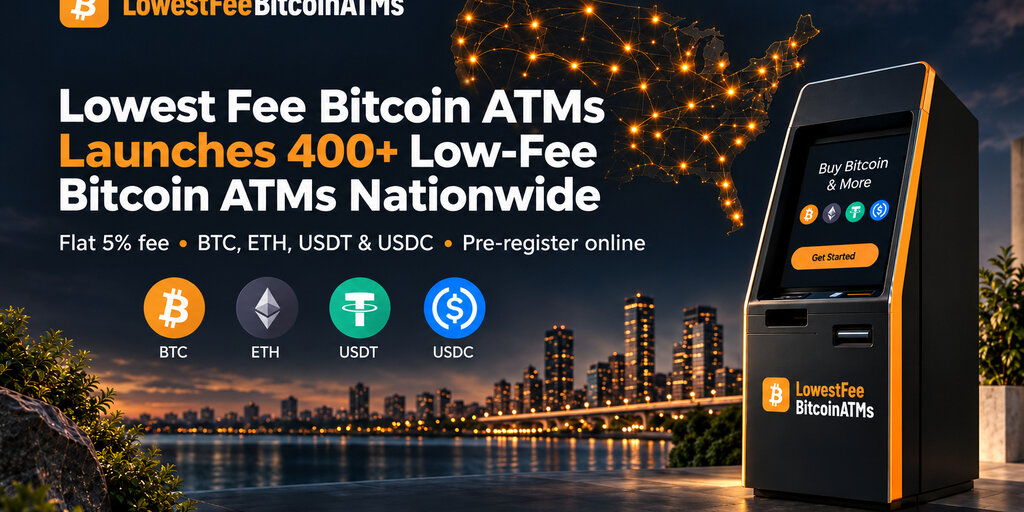
Lowest Fee Bitcoin ATMs Launches Over 400 Machines Across the U.S.
Lowest Fee Bitcoin ATMs has rolled out more than 400 crypto ATMs nationwide, instantly becoming one of the largest Bitcoin ATM operators in the country. Customers can buy Bitcoin, Ethereum, USDT, and USDC with cash for a flat 5% fee, with funds sent straight to their own wallets—no bank account or credit card needed, and fully non-custodial. The article contrasts this with the industry's typical 12%–20% fees, highlights the low-cost advantage, and outlines tiered daily limits and an online pre-registration process.
BTCcryptocurrency ATMcash to cryptoNon-custodial9 hours ago