Original article from CoinDesk, author: Policy
Compiled by | Express Knight @Odaily Planet Daily
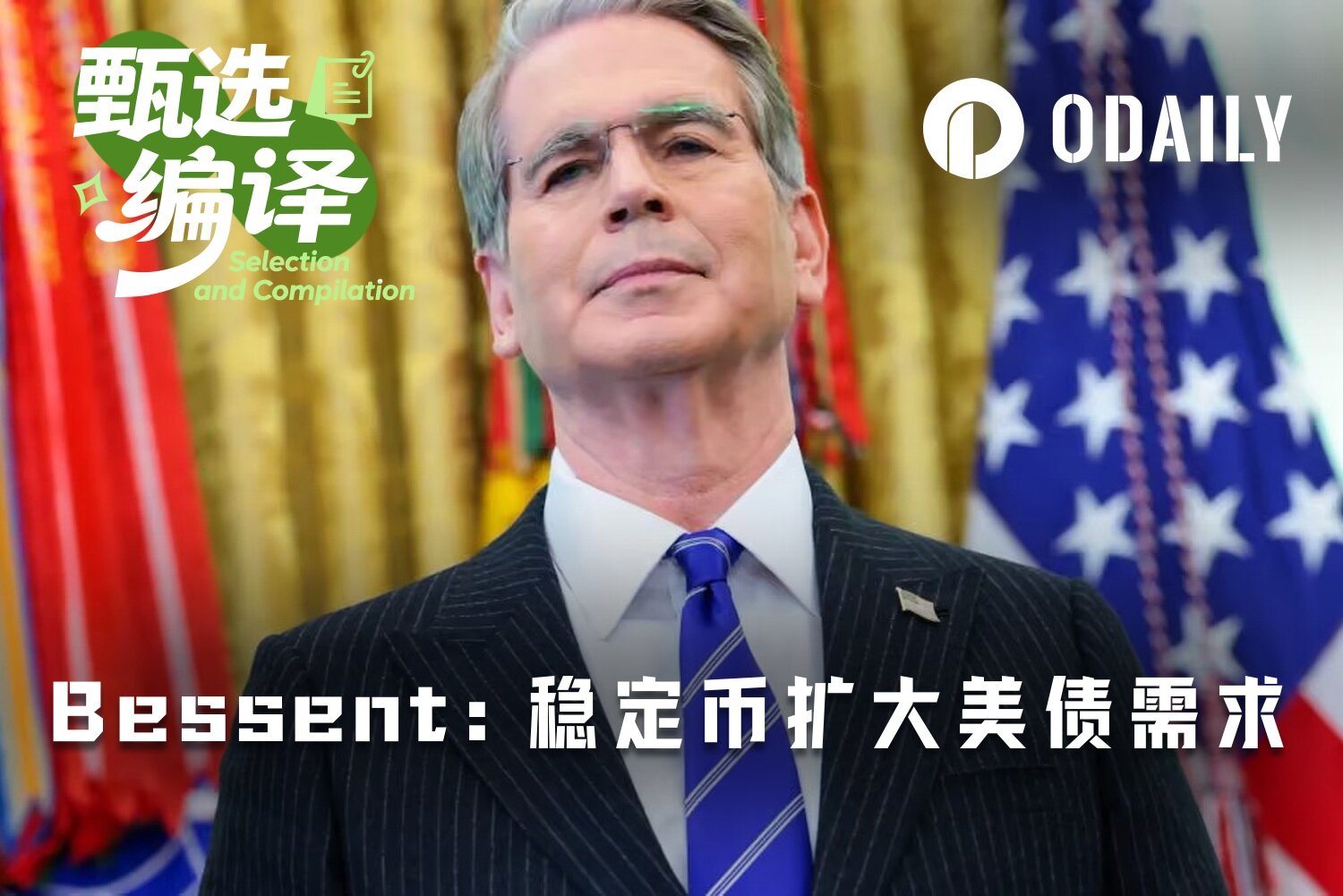
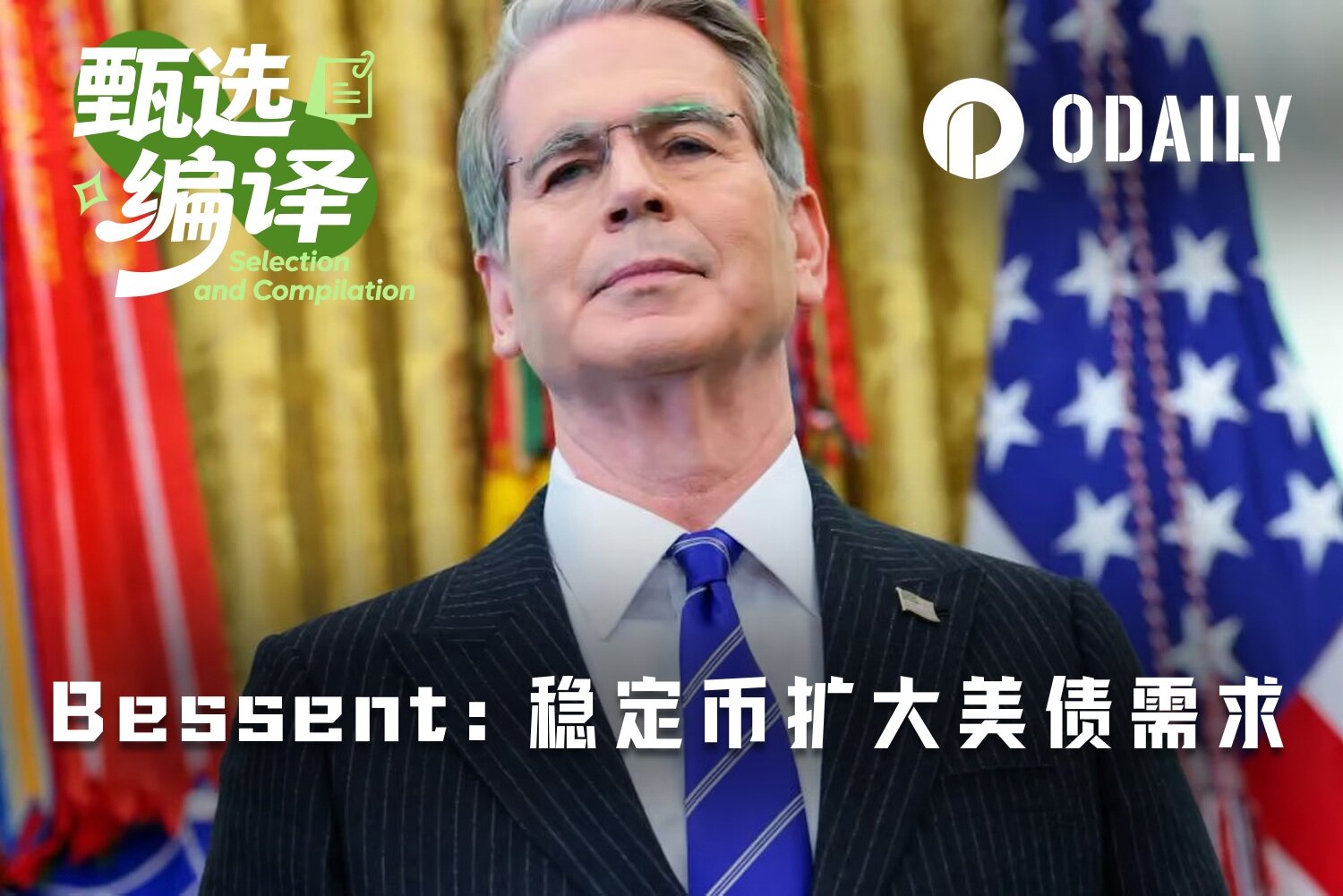
U.S. Treasury Secretary Scott Bessent said that as technology increasingly becomes an important source of American economic influence, digital assets help consolidate the global dominance of the U.S. dollar.
On Tuesday, speaking with the company's CEO Brad Garlinghouse at Ripple's Swell conference, Bessent suggested that historically the power underpinning the world's reserve currency came from military strength, but that this power is increasingly shifting toward technological leadership.
"We will keep the military umbrella, but I think it is increasingly becoming a technology umbrella," Bessent said.
He pointed out that the technology ecosystems of the United States and China are accelerating their divergence, and that countries and companies alike face a choice: whose AI systems to adopt, whose semiconductor technology to adopt. Bessent said he views digital assets as part of this competition—what kind of financial infrastructure countries choose will affect how far the dollar can reach.
"I think digital assets will be no exception, we will win on the digital asset technology stack, and that will continue to consolidate the dollar," he said.
These remarks provide a broader rationale for the Trump administration's push to bring crypto companies back to the United States: digital assets are not just a financial market, they are part of the infrastructure that sustains American economic influence.
The Trump administration has already pushed the GENIUS Act through, establishing a federal regulatory framework for stablecoins. Stablecoins are a type of cryptocurrency designed to maintain a fixed value relative to fiat currencies such as the U.S. dollar.
Bessent believes that stablecoins can strengthen the dollar's position—in countries where the local currency faces inflation or severe value fluctuations, stablecoins make it easier for locals to obtain dollars.
He said that more than 90% of stablecoins are backed by the dollar, and that stablecoin issuers often hold U.S. government securities as reserves. As adoption scales up, demand for these assets will also rise, thereby creating another source of financing for the federal government.
"I think this will become an important source of funding for the Treasury," Bessent said.
Opening New Markets
Some have suggested that stablecoins merely replace dollars that users already hold, and Bessent disagrees with this view. His reasoning is that stablecoins can reach new users in emerging markets—those who want to protect their savings from erosion by local currency depreciation.
"I think we are opening new markets around the world," he said.
However, the White House's larger plan for crypto market regulation suffered a setback: Congress failed to pass the Clarity Act, a bill that would have established a federal framework for the entire industry.
Bessent called the failure disappointing, but said the Treasury Department can work with regulators such as the SEC (U.S. Securities and Exchange Commission) and CFTC (U.S. Commodity Futures Trading Commission) to advance industry regulation through regulatory actions.
"At the Treasury, we have great convening power," he said, calling the SEC and CFTC "excellent partners" that will jointly form a regulatory framework that other countries can follow.
These actions by regulators can provide clearer rules for crypto companies, but rules made by regulators do not have the same durability as legislation.
Bessent also responded to industry concerns about "debanking." This term refers to financial institutions cutting off services to crypto companies, sometimes allegedly due to regulatory pressure.
He said the Clarity Act could have prevented such practices from recurring, but also argued that regulatory safeguards can still provide protection.
„Ich denke, wir können regulatorische Best Practices und Leitplanken etablieren, um zu verhindern, dass so etwas wieder passiert“, sagte Bessent.