
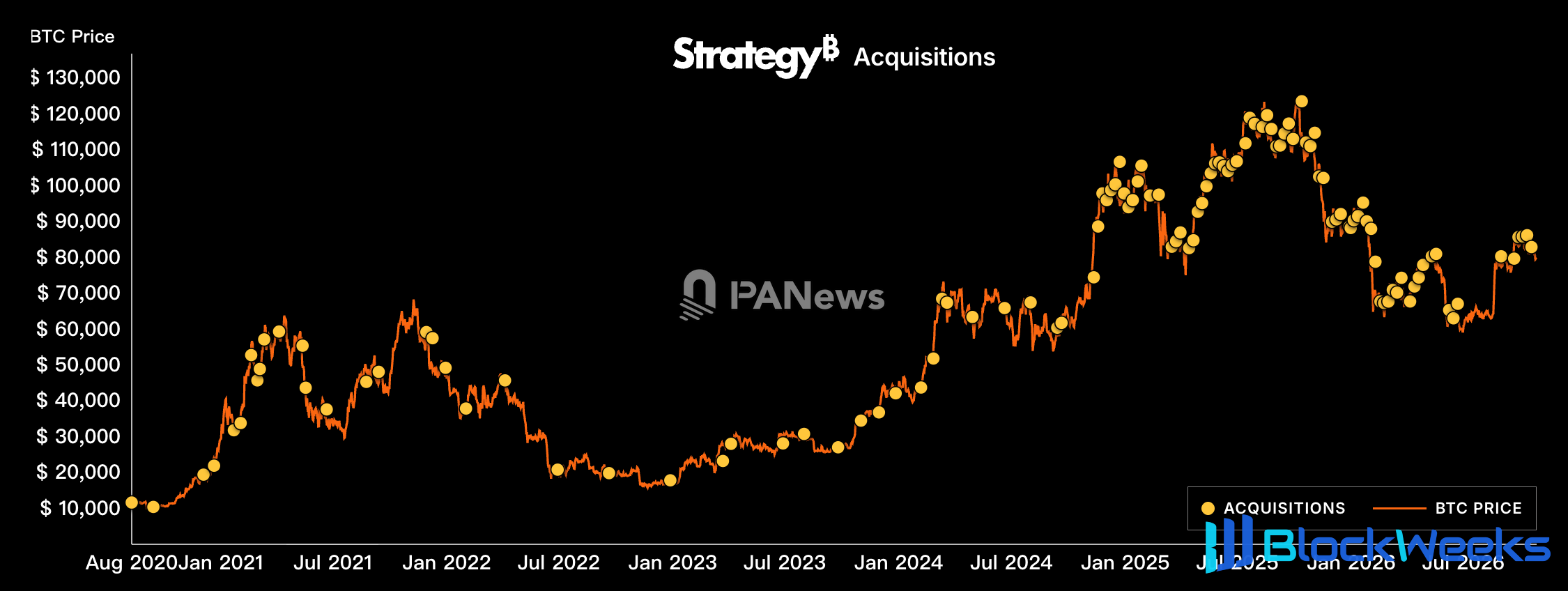
Strategy has not announced any new Bitcoin holdings over the past week, and both the frequency and the size of its purchases in recent months have weakened compared with before; since the end of August, it has bought only 6 times, accumulating 8,069 BTC, with 3 purchases this month totaling 851 BTC, and it has not yet fully filled the 6,916 Bitcoin reduction from July to August. Meanwhile, Strive has accelerated its coin purchases since August 21 and currently holds about 43,000 BTC, second only to Metaplanet and Twenty One Capital; it has recently raised funds through the issuance of perpetual preferred shares such as SATS and an ATM program, with a single purchase once approaching 6,200 BTC, and it has bought a cumulative 13,763 coins through 9 transactions, about 1.7 times that of Strategy over the same period.
The article argues that Strategy's slowdown in coin purchases is mainly related to repurchase demand for the preferred stock STRC. Since its launch in July 2025, STRC has raised about $21.04 billion cumulatively and used it to buy more than 180,000 bitcoins, but affected by market volatility, its price once fell to $74, below its $100 par value. Strategy subsequently raised the dividend rate to 12% and increased the repurchase authorization from $2 billion to $3 billion; to date it has repurchased about $2.05 billion, and in the latest week it repurchased about $205 million of STRC without buying bitcoin. STRC is currently about $99.2; although it has rebounded from its low, it has been below par for 5 consecutive months. The company also plans to switch to daily dividend payments in November 2026, with a shareholder vote scheduled for October 28, and whether this can improve financing efficiency still depends on market demand, financing costs, and product price stability. The article cites analysis saying that preferred stock financing can both support DAT companies' expansion and bring sustained dividend and repurchase pressure, and Strategy is currently facing capital competition between STRC repurchases and bitcoin purchases.
Author: Nancy, PANews
Once upon a time, even when mired in huge losses, Strategy never stopped scooping up bitcoin. But now, as bitcoin rebounds, this aggressive bitcoin "miser" has unexpectedly slowed its buying pace and even once pressed pause. By contrast, another DAT company, Strive, has added to its position against the trend, with its coin holdings ranking it among the world's fourth-largest bitcoin treasury companies.
With one hitting the brakes and the other stepping on the gas, Strategy and Strive have taken different treasury paths. And behind Strategy's slower coin-buying pace is its preferred stock STRC, which continuously supplies it with ammunition and is now competing for coin-buying funds.
Strategy slows its buying, Strive snaps up coins against the trend
Over the past week, Strategy has not announced any new bitcoin holdings, and its streak of consecutive increases has been interrupted again.
Previously, on weekends, Michael Saylor would often post his signature orange dot chart on social media, after which Strategy would usually announce a new round of bitcoin purchases. Each orange dot on the chart represents a bitcoin transaction. Over time, this signature move has also become an important signal for the market to observe Strategy's coin-buying trends and judge its confidence in increasing holdings.
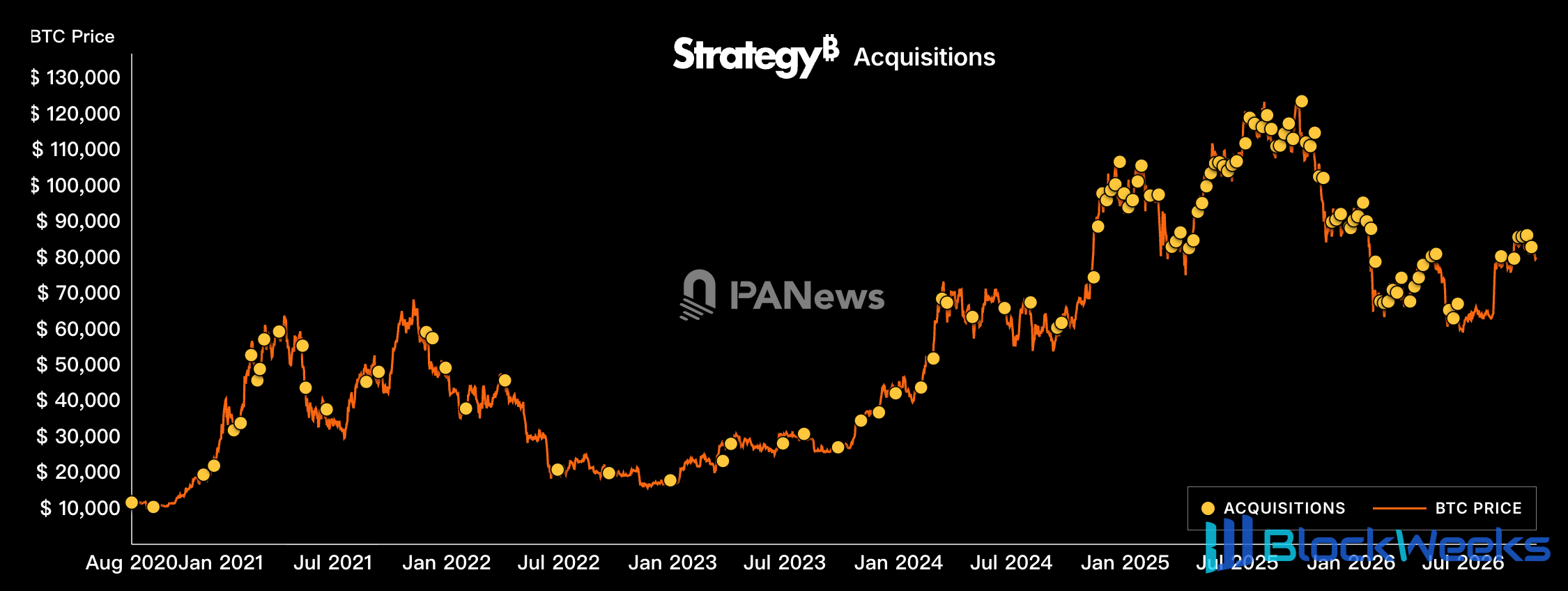
However, in recent months, the frequency of this signal has clearly decreased. Although Strategy has resumed consecutive increases over the past month or so, the scale of its coin purchases is far less than before.
Public data shows that since the end of August, Strategy has made only 6 bitcoin increases, buying a cumulative 8,069 coins. Among them, the 3 increases this month totaled only 851 coins. By comparison, previously, even when bitcoin prices were high, Strategy still maintained an aggressive buying pace, once buying more than 55,000 bitcoins in a single week at an average price of nearly $98,000. Now, whether in frequency or single-purchase size, Strategy's momentum has clearly weakened.
More notably, recent increases have not even fully filled the gap left by earlier reductions. In July and August of this year, Strategy reduced a cumulative 6,916 bitcoins.
Strategy has slowed down, but Strive is accelerating to catch up.
Now, Strive CEO Matt Cole has also begun to imitate Saylor by posting orange dot icons on social media, and its coin-buying strategy has become increasingly aggressive, with the momentum to succeed Strategy as the main force of bitcoin buying.
Since August 21, Strive's coin-buying pace has clearly accelerated, and it now holds about 43,000 BTC, second only to Metaplanet (44,000 bitcoins) and Twenty One Capital (43,500 bitcoins).

Strive mainly raises funds continuously to buy bitcoin by issuing high-dividend perpetual preferred shares such as SATA and SATS, and with the help of the ATM (at-the-market offering) mechanism. Recently, Strive announced the completion of the initial public offering of SATS perpetual preferred stock, issuing 7 million shares at $90 per share, raising a total of $630 million. At the same time, it also established a $1 billion SATS ATM issuance program, mainly to provide a financing channel for continued coin hoarding.
Previously, Strive's single-week increases were mostly only dozens or hundreds of bitcoins, but now it frequently makes large purchases, and its recent single increase once approached 6,200 bitcoins. At the same time, the purchase cycle has also shortened from once a week to once every few days.
Compared with Strategy over the same period, Strive bought a cumulative 13,763 bitcoins through 9 transactions, with an increase scale 1.7 times that of the former. Whether in buying frequency or increase intensity, Strive appears more aggressive.
Moreover, Strive is also becoming one of the important buyers in the recent bitcoin market. Taking October as an example, Strive has spent about $1.25 billion buying bitcoin this month, while U.S. spot bitcoin ETFs recorded more than $200 million in net outflows over the same period. Even last week its buying strength remained strong, with Strive spending more than $510 million buying bitcoin, far exceeding the $307 million in net inflows of U.S. spot bitcoin ETFs over the same period.
Spending over $2 billion on repurchases, STRC rebounds sharply but still has not recovered par
Recently, as bitcoin rebounded, Strategy slowed its pace of increases and instead used more funds to repurchase the preferred stock STRC.
Since launching STRC on July 29, 2025, Strategy has tried to broaden its financing channels through this preferred stock product to provide more ammunition for continued bitcoin accumulation. To enhance the product's appeal and expand financing scale, Strategy has repeatedly raised STRC's dividend rate, from 9% at IPO all the way to 11.5%.
Raising funds by issuing STRC and then using the proceeds to buy bitcoin has even become an important way for Strategy to expand financing. STRC.live data shows that Strategy has sold more than 100 million shares of STRC, raising about $21.04 billion, and used the related funds to buy a cumulative more than 180,000 bitcoins.
However, this financing model has not always been smooth sailing. Since May this year, affected by bitcoin market volatility and market concerns about Strategy's capital reserves, STRC's price deviated severely from its $100 par value, once falling to $74, and Strategy accordingly suspended issuing STRC.
For Strategy, STRC falling below par not only means reduced product appeal but also weakens its subsequent financing capacity and market confidence. To restore this financing channel, it first needs to stabilize STRC's price. To this end, Strategy began taking a series of measures, including raising STRC's dividend rate to 12% and launching a large-scale repurchase plan, from an initial announced $2 billion to the latest increase to $3 billion. To date, Strategy has repurchased about $2.05 billion worth of STRC, with about $950 million remaining available.
Months of continuous repurchases once pushed STRC's price close to $99.9, and it is currently at $99.2. Although STRC has rebounded sharply from its low, it has been below the $100 par value for 5 consecutive months.

And recently, Strategy also plans to further adjust STRC's dividend mechanism. According to the plan disclosed by the company, Strategy intends to change STRC to daily dividend payments in November 2026, with the relevant shareholder vote scheduled for October 28. If the amendment is approved, every calendar day, including weekends and holidays, will become a dividend record date for STRC.

This adjustment aims to improve the product's flexibility and attractiveness, and is also seen as a move by Strategy to respond to competitor Strive and its preferred stock product SATA's daily dividend mechanism. Strategy previously stated that the daily dividend mechanism is expected to help it capture about 93% of the market share, further strengthening product competitiveness and its own capital structure, and called on MSTR shareholders to actively participate in the vote.
However, a change in dividend frequency does not mean that dividend costs will decline accordingly. For investors, daily dividends may improve the holding experience; for issuers, whether financing efficiency can truly be improved still depends on market demand, financing costs, and whether product prices can remain stable.
Once a coin-hoarding tool, now siphoning off coin-buying funds
Although STRC's price has clearly recovered, Strategy has not slowed down or even stopped repurchases, and has maintained relatively large repurchase amounts for several consecutive weeks, even exceeding Bitcoin purchase amounts during the same period. In the latest week, Strategy did not purchase any Bitcoin at all, and instead repurchased about $205 million worth of STRC.
In this regard, Strategy has explained multiple times in relevant announcements that repurchasing STRC at a price below its $100 par value helps reduce expected annual dividend expenses, strengthen credit quality, and create long-term value for common shareholders. According to the company's relevant strategy, when STRC trades below $100, repurchases take priority over other capital allocation options; the larger the discount, the greater the repurchase effort. In other words, repurchasing STRC is not only to support its market price, but also an important tool for optimizing liabilities and capital structure.
In fact, the reason is not complicated. Because STRC must continue to pay dividends, the larger the outstanding share scale, the higher the dividend expenses Strategy will need to bear in the future. When STRC's dividend rate has risen to a relatively high level, the market will naturally focus on whether the company has an incentive to reduce long-term payment pressure through repurchases. Although Strategy has a dedicated dollar reserve to cover dividends and interest expenses, reserve funds are ultimately limited. By repurchasing STRC, Strategy can reduce future dividend burdens and gain more room for subsequent financial management.
The dilemma faced by STRC is also a common challenge for DAT companies financing through preferred stock. Preferred stock can help companies broaden financing channels and provide impetus for buying Bitcoin, but it also brings continuous dividend expenses and capital management pressure.
Alex Blume, founder and CEO of Two Prime, recently pointed out that products such as STRC and SATA issued by Strive provide far more than Bitcoin price exposure. Their price performance is also affected by management's operational capabilities, the issuer's ability to fulfill obligations, and the overall capital market environment.
In the view of James Butterfill, head of research at CoinShares, although share repurchases help reduce future dividend costs, at the current stage, repurchase funds are competing with Bitcoin purchases for precious capital. Preferred stock essentially amplifies market cycles: when the external financing environment is favorable, it can strongly support coin-buying expansion; but once market sentiment deteriorates, this funding support quickly weakens and may even turn into net selling pressure due to repurchase and dividend pressure.
For Strategy, STRC was once a financing tool that fueled its frenzied coin hoarding, but now it has also become a cost source that cannot be ignored in capital allocation. When repurchasing preferred stock and reducing dividend burdens become more important, buying Bitcoin is no longer its only priority use of funds.