A number theory mystery that humanity has been stuck on for decades—did AI solve it in just 8 pages?
Over the past two days, the entire mathematics community and computer science circles have been in enormous shock.
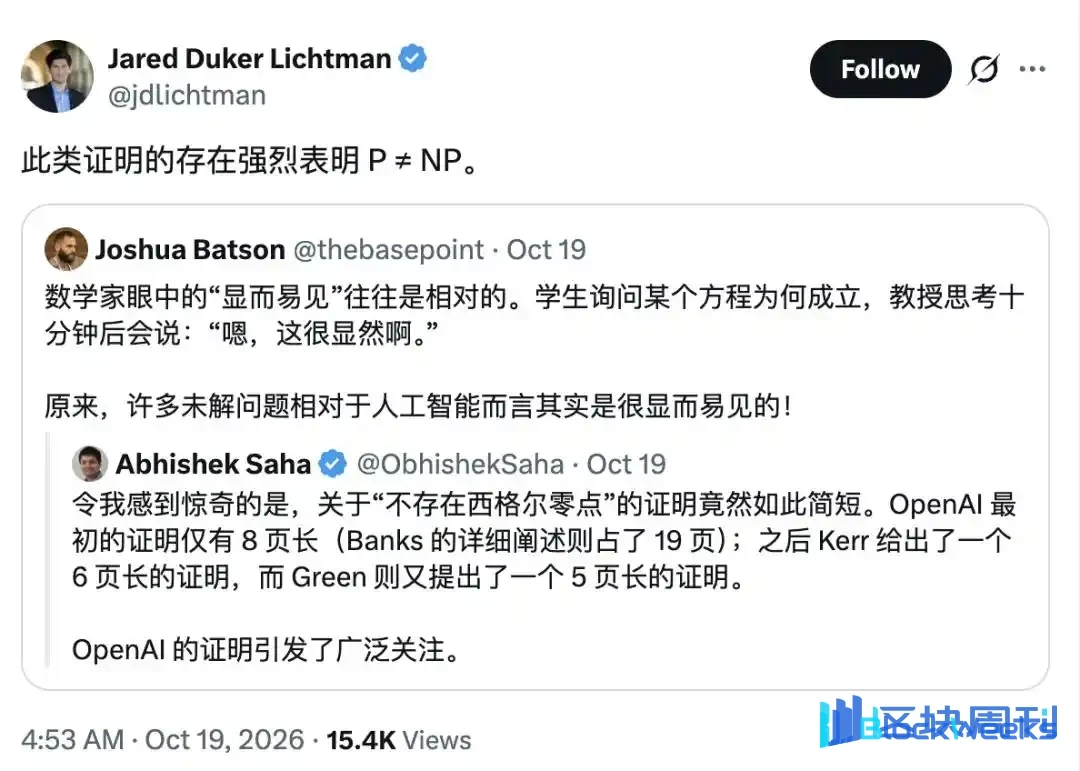
On October 18, Stanford University number theorist Jared Duker Lichtman's words on X instantly set the whole internet ablaze—
"The existence of such a proof strongly suggests P≠NP."
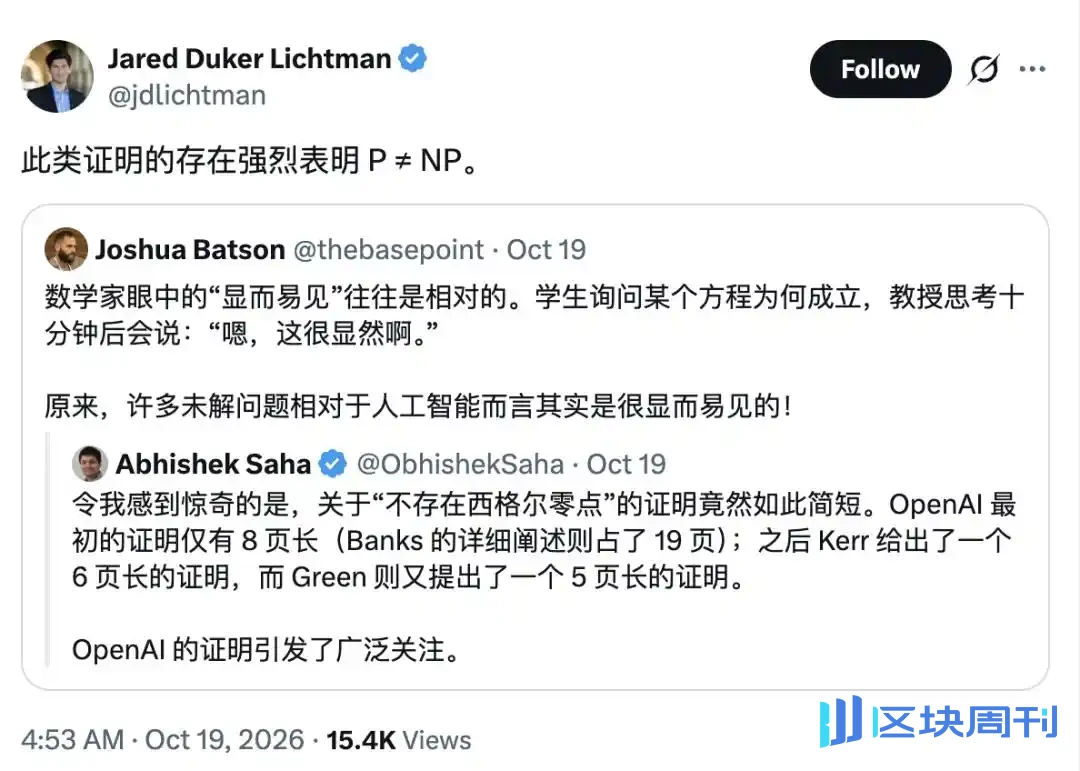
The trigger for this statement was the astonishing answer sheet just delivered by an internal OpenAI model—a proof that "there is no Landau-Siegel zero."
This key problem in analytic number theory, which has been stuck for decades, is widely recognized by the academic community as extremely difficult.
As a result, not only did OpenAI solve it, but the original proof was actually only 8 pages long!
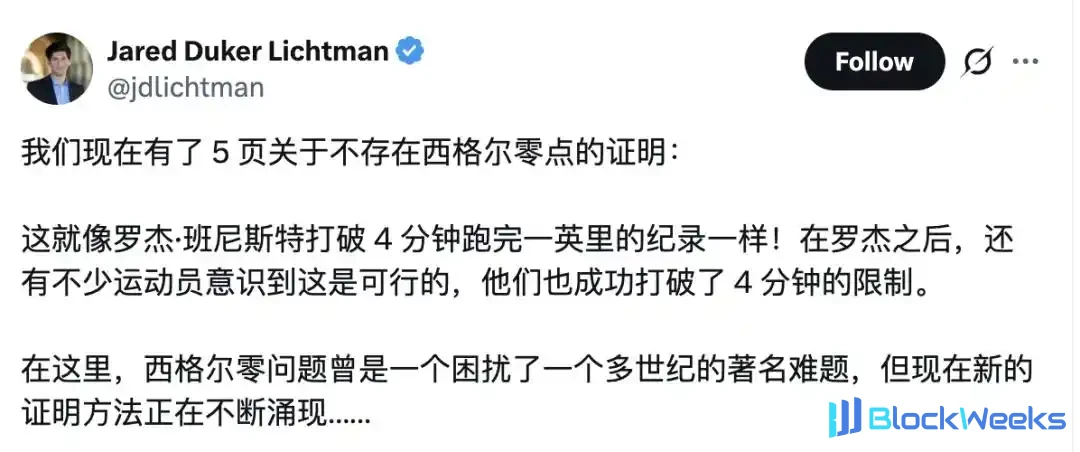
Even more exciting developments followed. Top mathematicians quickly followed up:
Bill Banks of the University of Missouri first wrote a detailed 19-page breakdown;
Immediately afterward, Bryce Kerr used biquadratic extensions
and Masser's classical results to compress the proof to 6 pages;
Subsequently, University of Oxford professor Ben Green cut it down again, directly giving the ultimate 5-page version!
From decades of hopeless unsolvability to just 5 pages. Professor Abhishek Saha of Queen Mary University of London raised a soul-searching question:
If this problem can be proved in just 5 pages, why did mathematicians miss it for decades?
Finding it is like climbing to heaven, verifying it is like drinking water
Why would a 5-page number theory proof make a Stanford professor directly think of the holy grail of computer science—P vs NP?
The reason is simple.
A 5-page proof can be read and verified by any expert in a few hours; but for these 5 pages, humanity's brightest minds struggled for decades.
"Finding is extremely hard, verifying is extremely easy." These eight words are precisely the underlying intuition of P≠NP!
In the comments section, Anthropic researcher Joshua Batson pointed out incisively—
Mathematicians' "obvious" is always relative. Facts have proved that many unsolved problems (relative to AI) are all obvious!
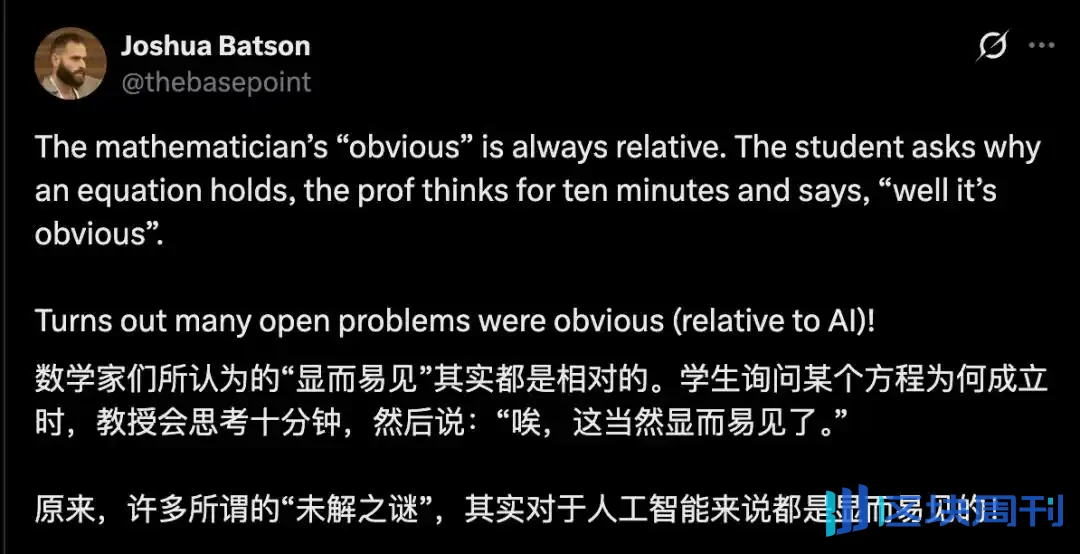
Behind the joke is an extremely serious question: when AI delivers more than 700 mathematical manuscripts within a few weeks, is the millennium prize problem P vs NP also coming soon?
Three high walls that have locked humanity down for fifty years
Explain P vs NP in one sentence: Are all problems whose answers can be quickly verified also problems whose answers can be quickly computed?
P is the set of problems that "can be solved quickly," and NP is the set of problems that "can be verified quickly."
Sudoku, class scheduling, and password cracking all belong to NP: give you the answer, and you can check whether it is right or wrong in a second; but to find it from scratch, you can only do something close to exhaustive search.
If P=NP, modern cryptography would instantly collapse, global finance would be left completely exposed, but all complex problems would usher in an ultimate shortcut;
If P≠NP, it means that the universe contains problems that essentially cannot be shortcut.
This problem was proposed in 1971, with a $1 million prize. The vast majority of scientists believe P≠NP, but for more than fifty years no one has been able to prove it.
Where is the difficulty? Because humanity has not only failed to find the key, but has instead proved that existing lock-picking tools are doomed to be ineffective.
These are the famous three "barriers":
1. The relativization barrier (1975): classical methods relying on simulation and diagonalization simply cannot solve it;
2. The natural proofs barrier (1994): most proof approaches for circuit lower bounds, if they could prove P≠NP, would incidentally break pseudorandom number generators, leading to self-contradiction;
3. The algebrization barrier (2008): upgraded methods combined with algebraic techniques were also proved to have insufficient firepower.
In June of this year, complexity theorist Lance Fortnow pessimistically stated: at present, humanity does not even have a feasible attack route.
He suggested that challengers first prove a much simpler problem such as "SAT has no quadratic-time algorithm," and then added a finishing blow: "You won't succeed there either."
This is the opponent AI has to face.
719 manuscripts bombard the walls, a 9-year-old prodigy gets right up close
Facing walls of bronze and iron, AI directly launched a saturation attack.
On October 6, OpenAI released 722 manuscripts at once on GitHub (3 were withdrawn the next day), classified into 372 result families.
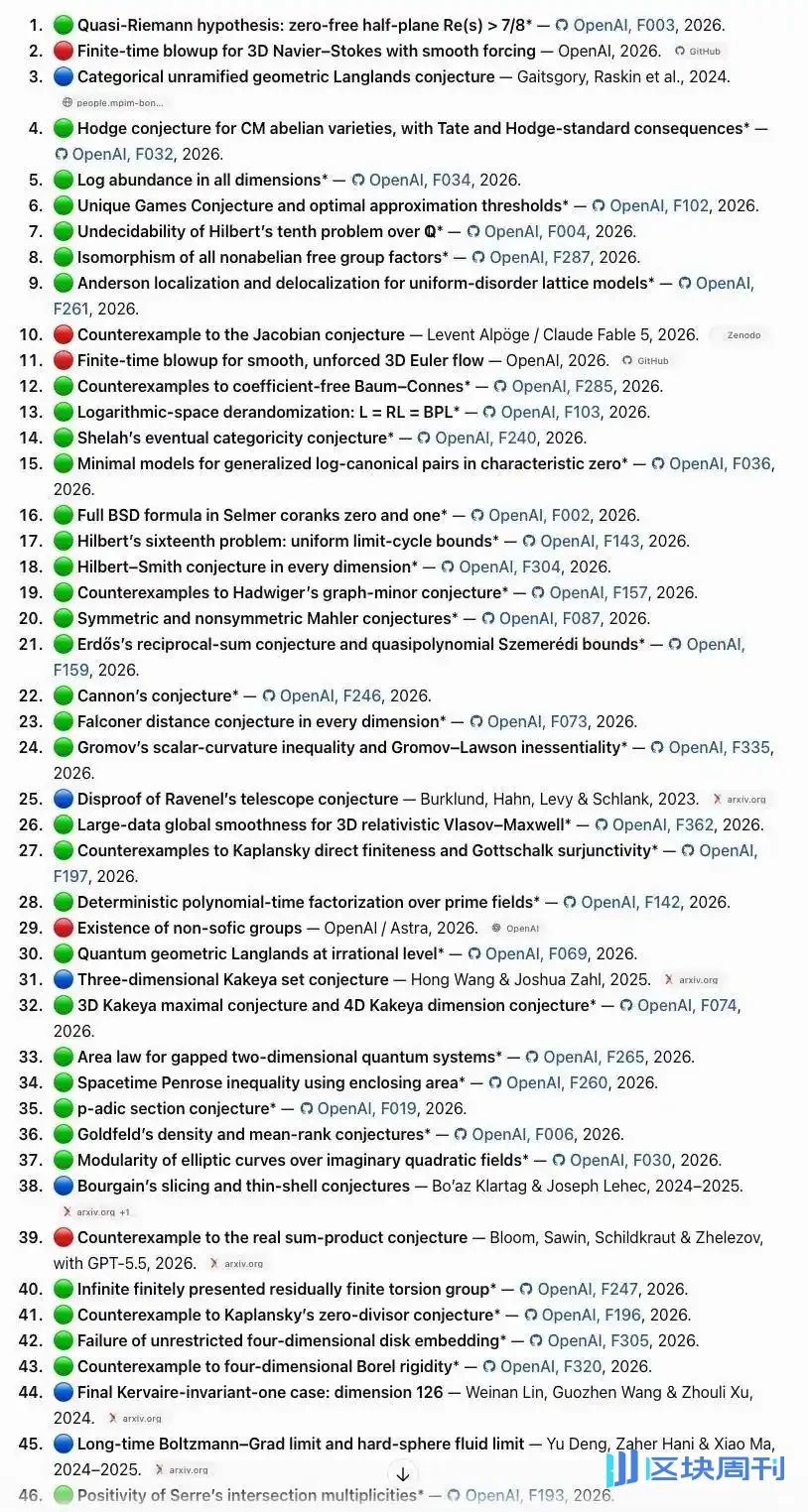
The internal model attempted about 4,000 open problems, averaging only about 3 hours of ChatGPT Pro compute per problem.
Among them, theoretical computer science accounted for 40 families. Although it didn't directly solve P vs NP, several papers landed precisely on the main roads leading to it.
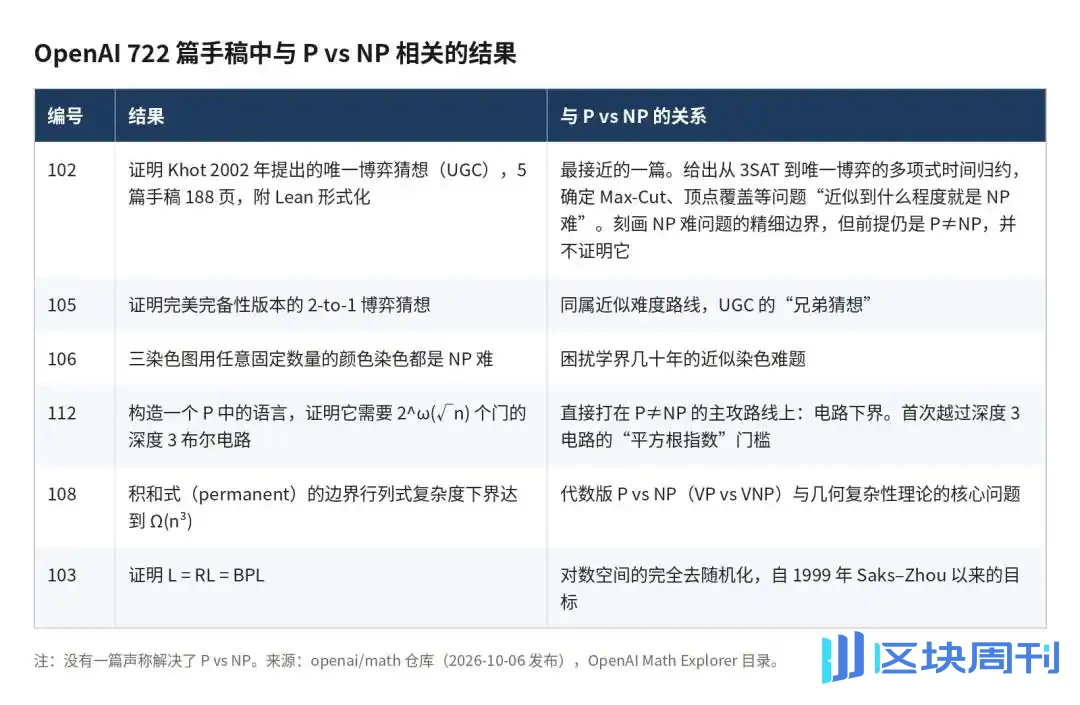
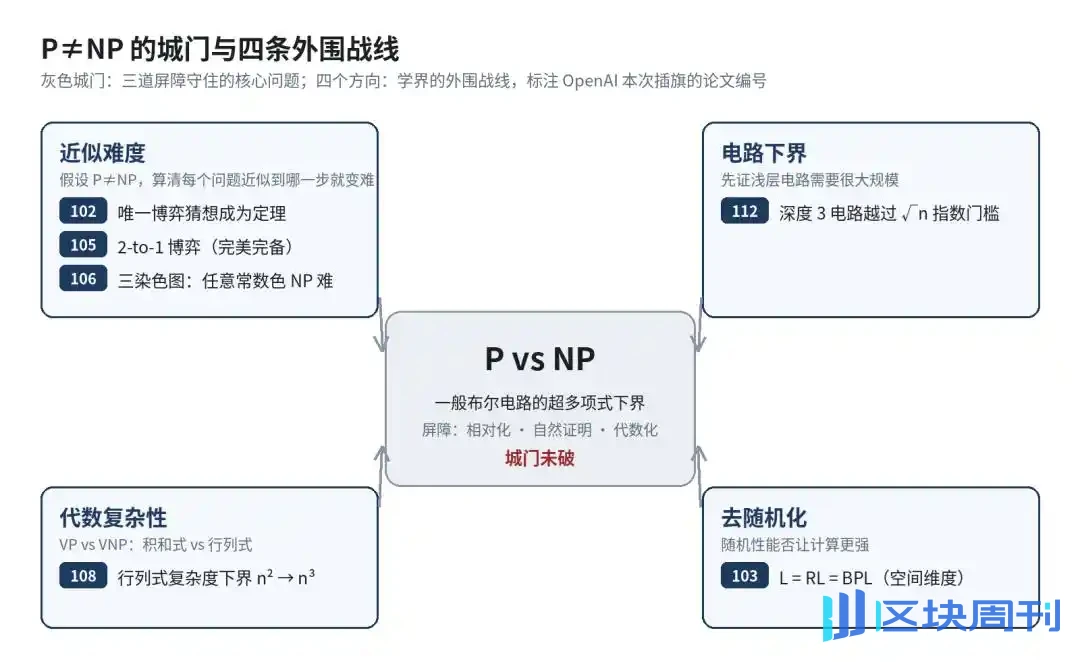
In June of this year, complexity theorist Lance Fortnow wrote: apart from simulation, we have no way to handle general polynomial-time algorithms; circuit complexity, proof complexity, algebraic geometry, and other routes are all stuck far below the full power of polynomial time. His conclusion was that there is currently not even one viable attack route. Coincidentally, OpenAI's six results this time planted a flag on every single one of them.
Family No. 112 (depth-3 circuit lower bounds): The most promising route to proving P vs NP is to prove that some NP problem requires "super-polynomial-size circuits." Humanity has long been stuck at
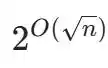
on explicit lower bounds for depth-3 circuits; this time, AI directly crossed this threshold.
Family No. 102 (Unique Games Conjecture, UGC): Proved this core conjecture proposed by Subhash Khot in 2002 (including partial Lean verification). It is closely adjacent to P vs NP and greatly strengthens the inapproximability limits of many NP-hard optimization problems.
Foundational algorithms and derandomization: Achieved full derandomization of randomized logarithmic space (L=RL=BPL); compressed the matrix multiplication exponent to
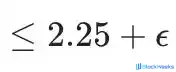
; integer multiplication and DFT fell below
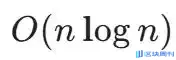
time.
Around Family No. 102, the "Unique Games Conjecture," there was also a heart-piercing interlude.
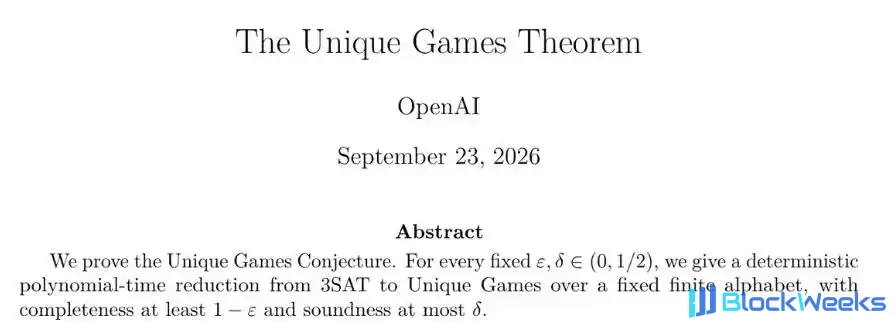
Dana Moshkovitz, the wife of the famous scholar Scott Aaronson, devoted her entire career to this conjecture. On the night of the release, their 9-year-old son ran over to mock his mother:
"I heard a robot solved the problem you've been researching your whole life!"
Quanta Magazine also disclosed that MIT's Dor Minzer team, after hearing rumors about OpenAI on September 11, rushed to release their own proof of a related variant before OpenAI's publication so as not to be scooped by a machine.
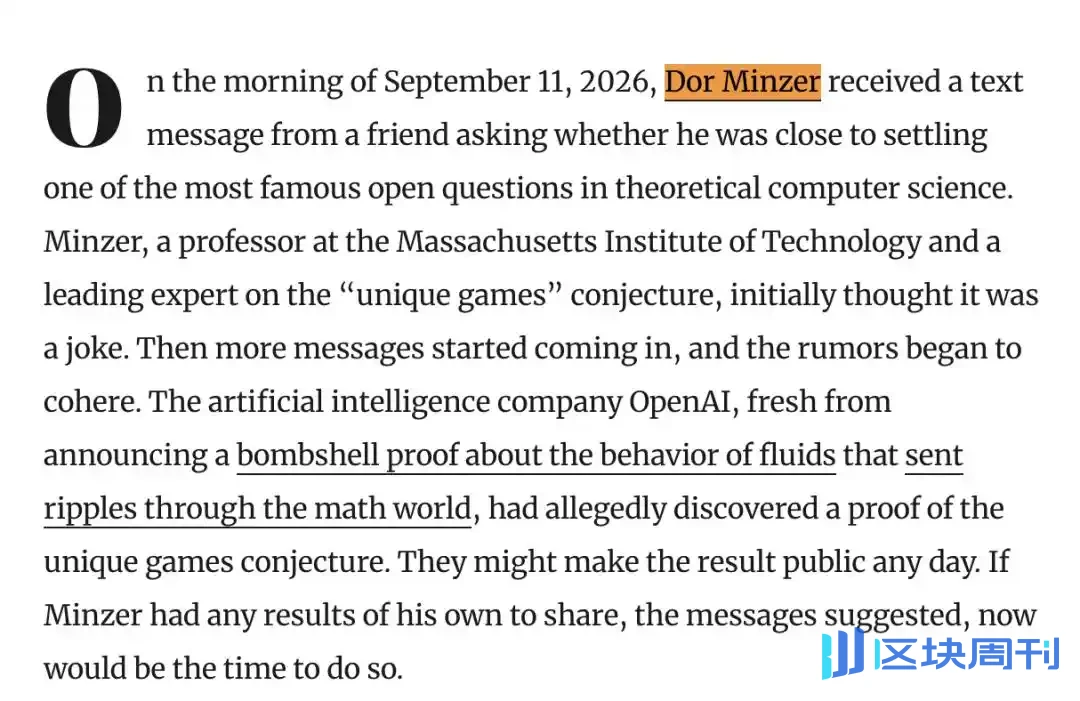
Human mathematicians have already begun racing against AI.
Big Shots Throw Cold Water: Outer City Taken, City Gate Unbroken
However, the experts who know the field best are the calmest.
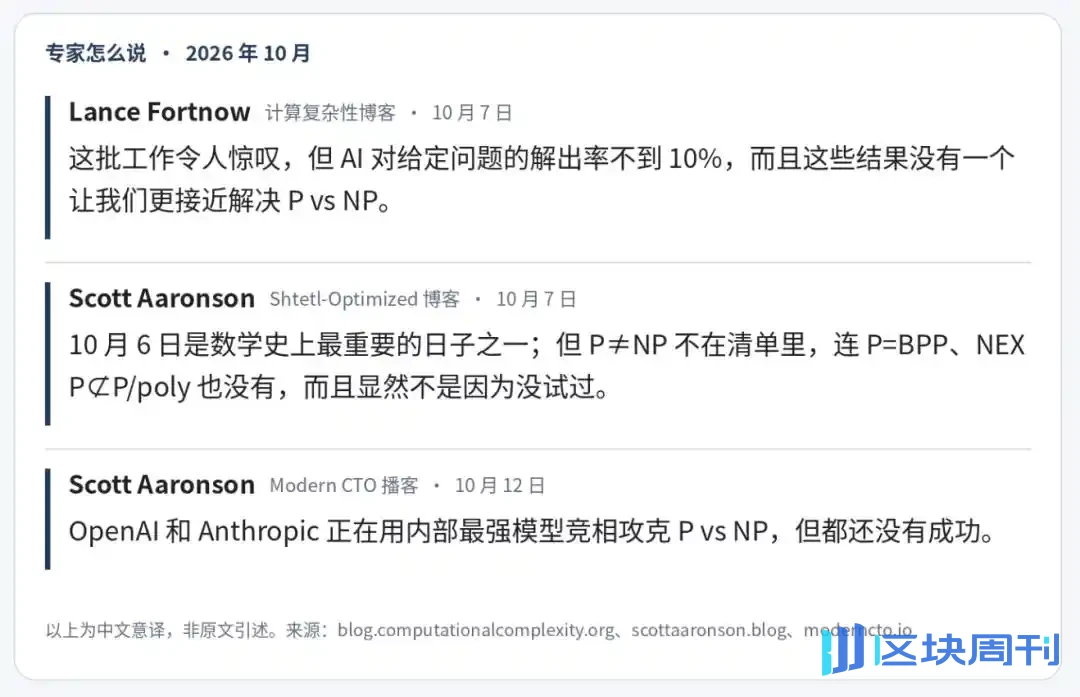
Lance Fortnow published an article the next day pointing out: AI's solve rate for given problems is less than 10%, and none of these results brings us any closer to solving P vs NP.
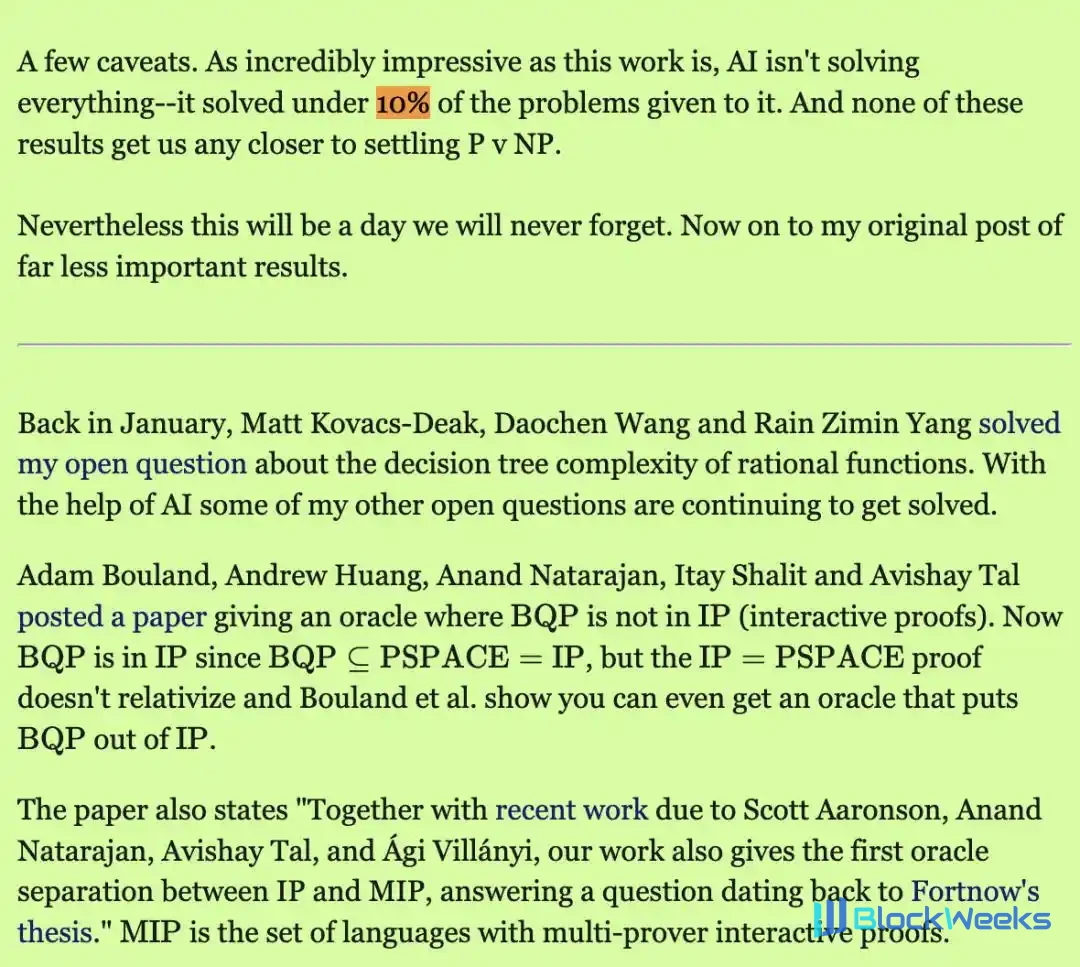
Although Scott Aaronson called October 6 "one of the most important days in the history of mathematics," he also pointed out: the list not only lacks P≠NP, but also lacks "smaller" hard problems like P=BPP—clearly not because no one tried.
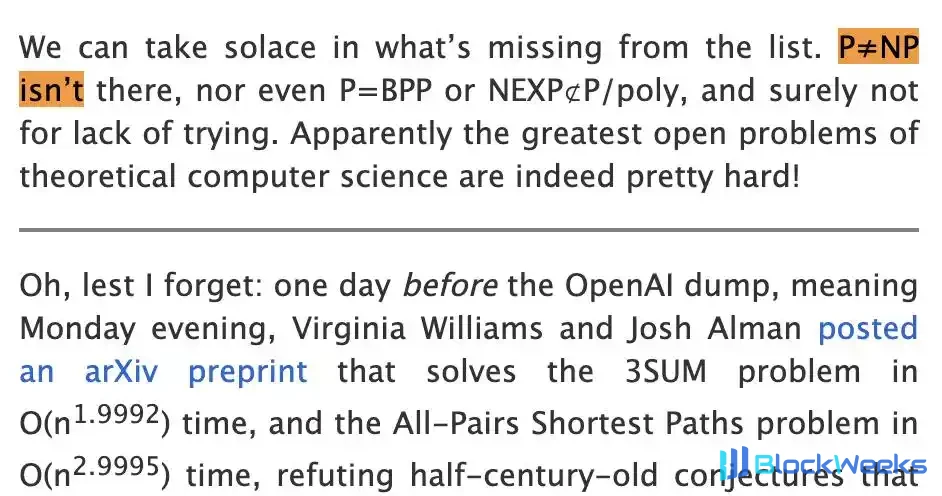
He revealed on the podcast: OpenAI and Anthropic are using their strongest internal models to race toward cracking P vs NP, but neither has succeeded yet.
Looking at it calmly, there are still four major hard obstacles before a breakthrough:
1. Verification is far from complete: only about 42% come with Lean formalized proofs, and the rest rely entirely on manual work. Aaronson admits that almost no human has truly understood any of these long proofs.
2. Readability is extremely poor: Moshkovitz commented that the only game proof by AI was written "so badly that it is impossible to understand without the help of AI."
3. Lean is not omnipotent: machines can only guarantee that the reasoning is correct, but cannot guarantee that the formalized definitions are completely consistent with the original problem, nor can they judge whether the result is important.
4. The core route remains blank: what AI has broken through are depth-3 circuits and algebraic circuits, while the "general Boolean circuit lower bounds" that could imply P≠NP remain unwritten.
The Ultimate Paradox: Is AI Living Proof of P≠NP?
Since the city gate has not been breached, why still say "AI is approaching"?
Because three signals are already incomparably clear.
First, the "difficulty" of difficult problems has been repriced. The 5-page proof of the Siegel zero shows that what some dead ends lack is the one step no one thought of. How many conjectures are only one layer of window paper away? No one is sure.
Second, the peripheral positions are blooming everywhere. Unique games, circuit lower bounds, derandomization, matrix multiplication... these milestones in surrounding positions have been intensively conquered by AI, and the main direction will sooner or later break through.
Third, scale and speed are not on a human order of magnitude. 4,000 problems, averaging 3 hours each. When major laboratories aim the next generation of their strongest computing power squarely at P vs NP, quantitative accumulation is highly likely to trigger qualitative change.
As for the final outcome, interesting betting disagreements have even emerged in academia.
Aaronson still places a heavy bet on P≠NP; but some scholars believe that if AI can truly break through, the answer is more likely to be P=NP — because getting AI to search out a clever algorithm is much easier to imagine than using existing mathematics to prove "impossible."
However, the most intriguing and humorous part of the whole matter is —
The more powerful AI becomes, the more it itself looks like living proof of P≠NP.
It consumes massive computing power to "search" for proofs, while humans spend a few hours to "verify" the results.
If one day AI truly burns through its computing power and proves P≠NP, that will be the most perfect self-proof of this millennium problem.
This article comes from the WeChat public account "Xinzhiyuan", author: ASI Revelation