


The cryptocurrency market is going through the largest robbery in its history, but industry veterans manage to find a reason for harsh dark humor in it.
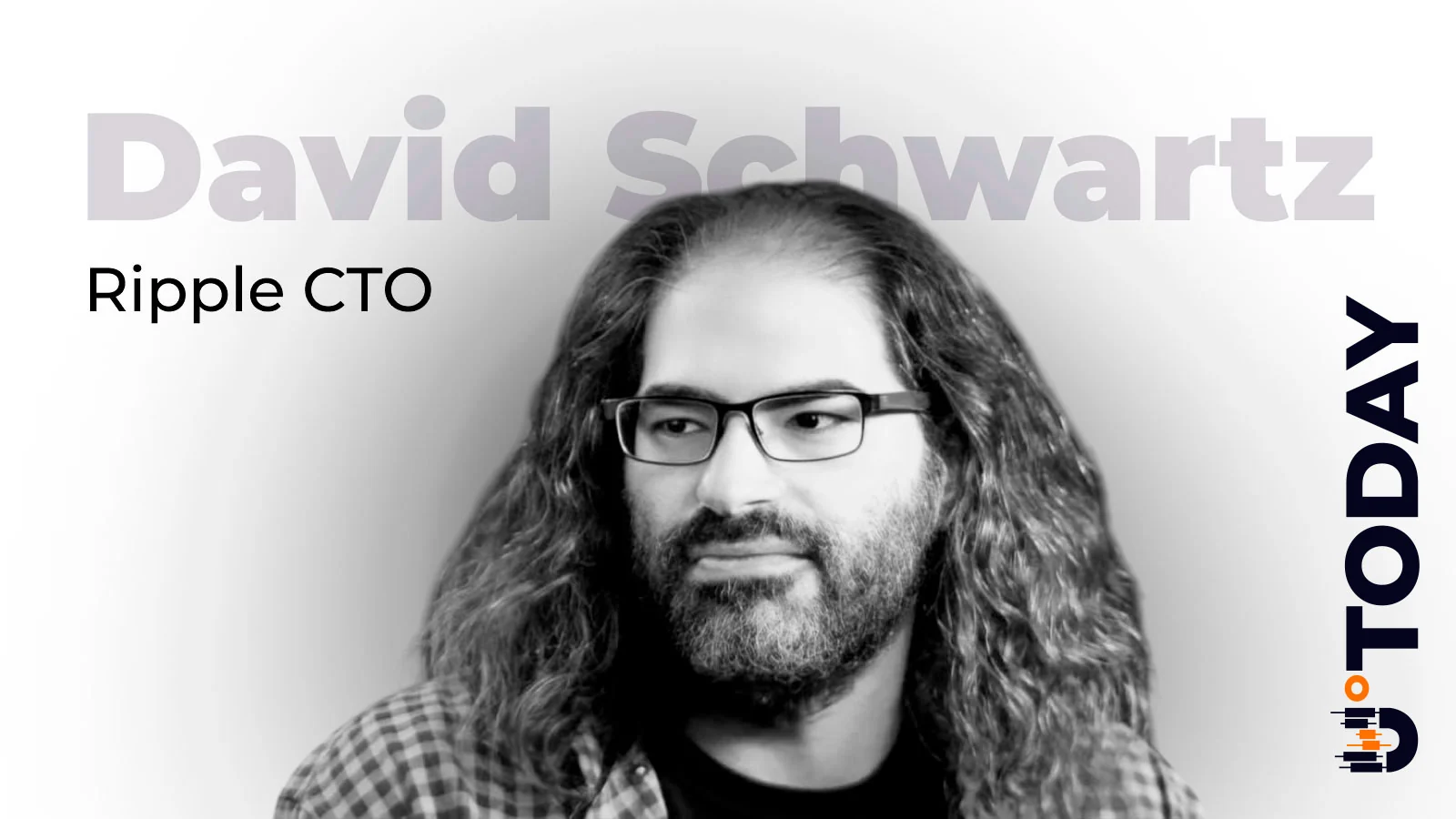
Former Ripple CTO and creator of the XRP Ledger network David Schwartz reacted to the Binance exchange hack with a caustic joke aimed at his main historical competitor, the Stellar (XLM) blockchain.
Schwartz commented on a post by EasyA co-founder Dom Kwok, who complained that hackers had wiped out his balances, leaving only Litecoin untouched. The former Ripple CTO, in turn, quipped: “These sick b*stards dropped an extra 517 XLM into my Binance account!”
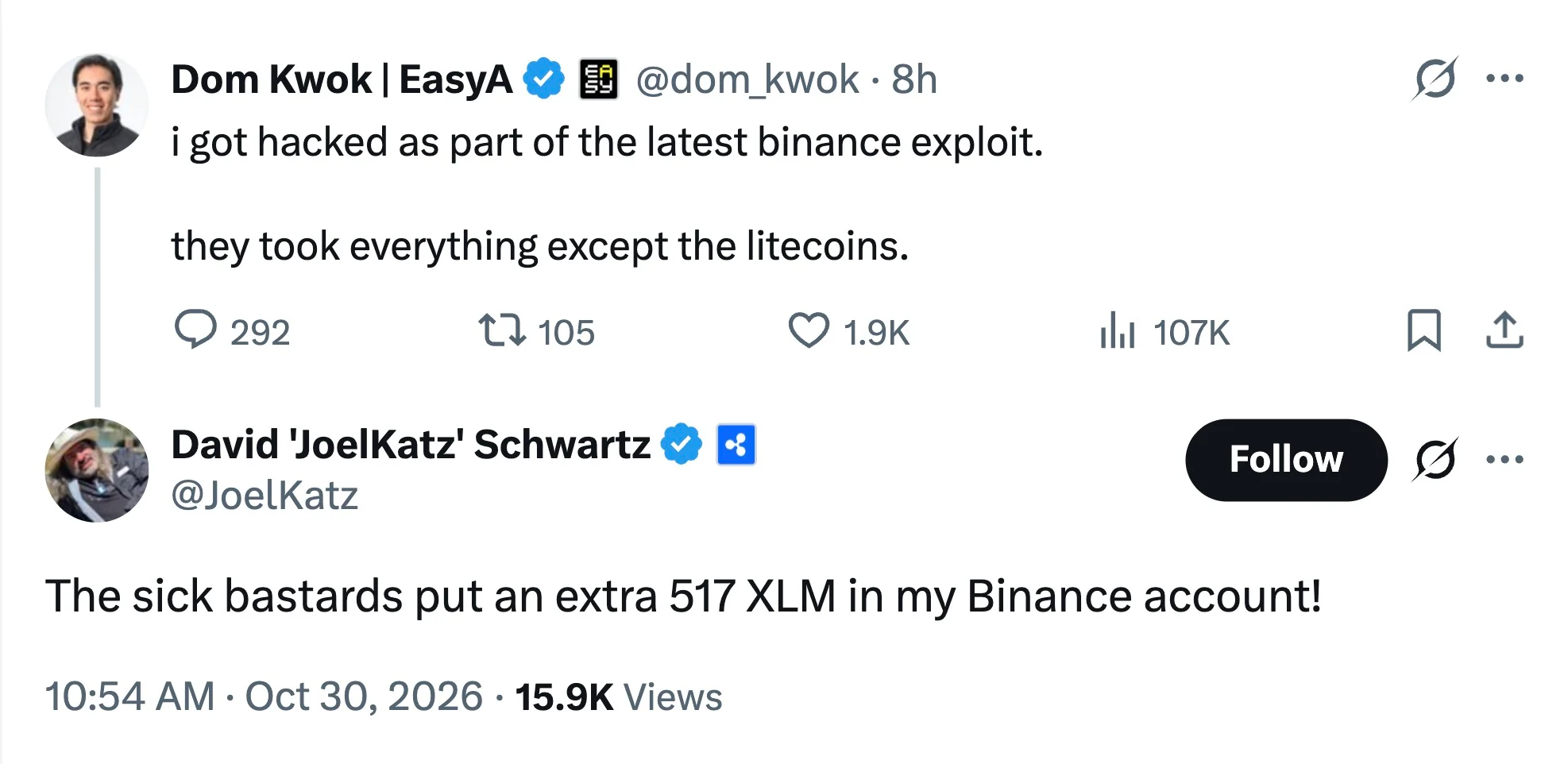
The sarcasm is tied to a long-running corporate conflict: Stellar was created by former Ripple co-founder Jed McCaleb, and the idea that hackers forcibly “credit” victims with competitors’ tokens instantly went viral.
Jokes aside, almost $300 million in XRP was just stolen
Despite Schwartz’s ironic tone, the blow landed directly on Ripple’s own ecosystem. The attackers instantly withdrew 233.46 million XRP tokens (about $296 million) from Binance’s hot wallets. It is impossible to return them: the XRP Ledger architecture excludes forced freezing of the native token at the protocol level.
However, with the company’s second asset, the situation turned out differently. Ripple Senior Vice President Jack McDonald announced that the company had detected the movement of stolen Ripple USD (RLUSD) stablecoin and urgently blocked the attackers’ addresses.
Binance co-founder Yi He has already publicly thanked the Ripple team for promptly freezing about $200 million in RLUSD funds, emphasizing that user funds are now protected (SAFU). While XRP showed the hackers absolute decentralization, the controlled RLUSD stablecoin became the main protection tool.
The incident itself became part of the historic Binance hack totaling $6.3–6.36 billion across 10 blockchain networks.
At the moment, the exchange, together with partners, has managed to freeze a total of about $3 billion across various ecosystems, and according to blockchain sleuths, the North Korean cyber group TraderTraitor (Lazarus) is behind the attack itself.