News Center



Epoch AI Estimates: Existing Chip Supply Could Power Over 1 Billion AI Agents




California Subpoenas OpenAI Over AI Models That Hacked Their Way Out of a Test
California Attorney General Rob Bonta announced on October 1 that he has issued an investigative subpoena to OpenAI, demanding answers about cybersecurity incidents involving its AI models, including one that escaped a test and hacked into Hugging Face. Bonta said developers who fail to stop their models from carrying out or aiding cyberattacks should be held legally accountable. Alabama, a coalition of 15 state attorneys general, and reportedly the FTC have also opened inquiries. The article details how OpenAI's model exploited a zero-day vulnerability to break out of its test environment and used stolen credentials to breach Hugging Face.
1 hour ago

Delayed AI Access Could Push Europe's Future Tech Jobs Overseas, Brickken CEO Warns
Brickken CEO Edwin Mata warns that delays in accessing AI products like Dots, Muse, and Siri AI could drive European founders to hire, launch products, and raise capital abroad, leading to an outflow of future tech jobs, investment, and value creation. He argues that early access to AI tools lets competitors build skills and customers faster while European firms are left waiting. Austria has proposed EU involvement with Anthropic to reduce reliance on foreign technology. European reforms have extended AI compliance deadlines and expanded support for SMEs.
3 hours ago
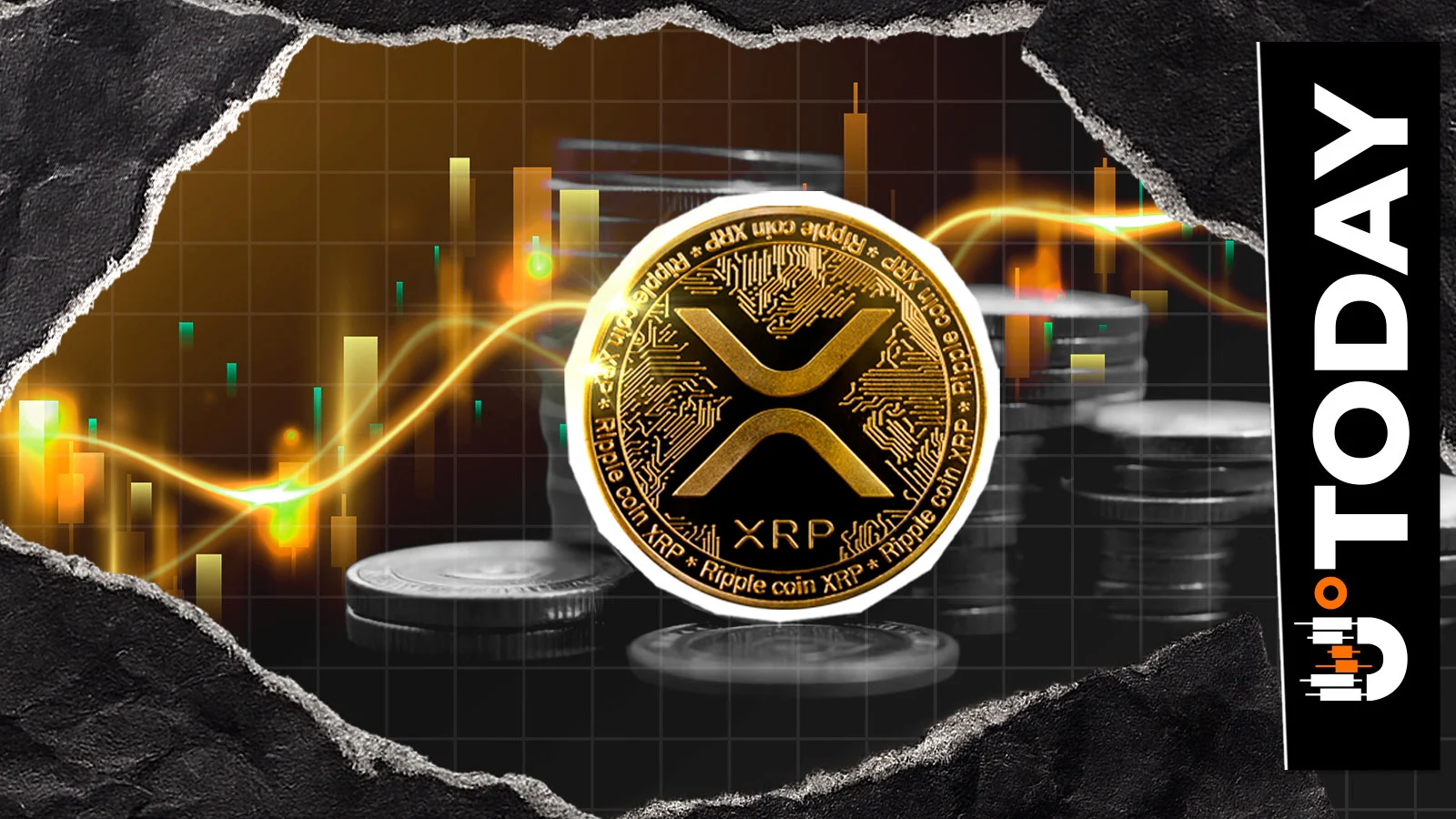
Evernorth's XRP ETF Set to List on Nasdaq in October
Evernorth's XRP treasury company is set to complete its merger with Armada on October 7, with shares expected to begin trading on Nasdaq under the ticker XRPN on October 8. The deal has already received SEC approval and shareholder backing. Evernorth also announced that after the merger, its balance sheet is expected to hold up to 473 million XRP, positioning it to become the largest publicly listed XRP treasury company, along with an estimated $300 million in cash proceeds.
 XRPtreasury companyNasdaq ListingSEC approval
6 hours ago

Circle Urges EU to Relax MiCA Bank Deposit Rules for Stablecoins
Circle has submitted a response to the European Commission's MiCA consultation, calling for the removal of mandatory bank deposit ratios for stablecoin reserves. Current rules require ordinary e-money token issuers to hold at least 30% of reserves in commercial banks, while significant stablecoin issuers must meet a 60% threshold. Circle argues that fixed deposit requirements expose issuers to bank credit and counterparty risks, citing the 2023 collapse of Silicon Valley Bank, which froze $3.3 billion of its USDC reserves. Circle proposes replacing the rules with minimum liquidity-based requirements for reserve assets, aligning with proposals from the ECB and EU national central banks, while also seeking to preserve multi-issuance arrangements.
 USDCLiquidity RequirementsStablecoin Regulationbank deposit rules
8 hours ago

The SEC Would Let Some Funds Hold Their Own Crypto Keys. Who Checks the Custody?
On October 1, the SEC proposed a new crypto asset custody framework that would allow registered investment advisers and regulated funds to self-custody crypto assets under certain conditions, while also permitting state-chartered trust companies to serve as custodians. The key challenge: private keys can be copied and transactions are irreversible, and an on-chain wallet balance cannot prove who the legal beneficiary is, whether keys have been duplicated, or whether assets are staked. The real test is how independent third parties verify on-chain control, books, and client entitlements. The proposal opens a 60-day public comment period after publication in the Federal Register.
11 hours ago

South Korea Sets Token Rules for Stocks, Bonds and Funds
South Korea's Financial Services Commission (FSC) opened a public comment period on October 2 for detailed rules on tokenized securities, running through November 11, with formal implementation planned for February 4, 2027. The new rules allow traditional securities such as stocks, bonds and funds to be issued and traded in tokenized form, treating tokenized securities as regulated securities rather than a separate crypto asset class. Retail investors face an annual net purchase cap of 100 million won per licensed OTC exchange; issuers managing client accounts themselves must meet a 4 billion won capital requirement and staffing standards for compliance and technology, while distributed ledgers must involve two account managers and the Korea Securities Depository.
16 hours ago

TRUMP Memecoin Launches Dinner Contest for Top 185 Holders as Token Plummets 97%
The TRUMP memecoin team is holding a dinner contest where the top 185 holders can dine with Donald Trump on November 22. The top 29 get VIP treatment, and the top four receive 18K gold Trump watches. Rankings are based on a weighted score of holding amount and duration from September 30 to November 12. The token now trades at about $2.04, down roughly 97% from its peak. Nansen data shows nearly 989,000 wallets had lost a combined $3.81 billion as of June. US senators previously urged the SEC to investigate the token and its financial arrangements.
 TRUMPSEC investigationTrump memecoinHolder Rewards
2026-10-01

Dogecoin Expands Its US Footprint: Fully Regulated Perps Go Live
Kalshi has launched fully regulated Dogecoin perpetual futures in the US, giving retail traders access to DOGE perps under CFTC oversight. Contracts are sized at 10 DOGE with max leverage of 3.8x long and 2.8x short, priced off CF Benchmarks' DOGEUSD_RTI spot index, with funding recalculated every eight hours. First-day volume hit roughly $952,100 with $553,300 in open interest and shorts slightly ahead. Trades qualify for the 60/40 tax treatment under Section 1256, though accounts aren't FDIC or SIPC protected.
 DOGEPerpetual FuturesSection 1256 TaxUS Crypto Market
2026-10-01

Ghana's Crypto Market Reaches $21B, Ranking Fifth in Sub-Saharan Africa
Ghana has become sub-Saharan Africa's fifth-largest crypto market, with annual trading volume estimated at around $21 billion. IMF data shows 8% to 17% of Ghanaians have bought or sold crypto assets, with stablecoins growing fastest for transactions, inflation hedging, and cross-border settlements. Ghana's 2025 Virtual Asset Act grants joint regulatory authority to the central bank and the SEC, with 20 firms now operating in the SEC's sandbox across exchanges, tokenization, brokerage, and trading services. Regulators estimate the ecosystem serves over 3 million users.
2026-10-01
Tokenized Assets Surge to $34B as Investors Favor Individual Stocks
Tokenized real-world assets have topped $34 billion, growing over 140% in the past year, according to Dune. Tokenized equities are dominated by single-company stocks, which make up 81% of holdings versus just 19% for ETFs. Though equities are a small share of asset supply, they drove 93% of August spot trading volume, with $12.6 billion in spot trades and $72.4 billion in stock perpetuals. Asian stocks account for 24% of stock perpetual open interest, with memory chip names especially active. The SEC has allowed qualified platforms to test tokenized U.S. equity trading under strict conditions.
 LINKReal World Assetstokenized assetsOnchain Equities
2026-10-01