News Center



Epoch AI Estimates: Existing Chip Supply Could Power Over 1 Billion AI Agents






Uniswap Forms Cup-and-Handle Pattern, Eyeing $10.30
Uniswap (UNI) is forming a cup-and-handle pattern, trading near $8.92 with key resistance at $10.30. The daily RSI sits at 60.27, while a bearish MACD crossover signals fading momentum. On the 4-hour chart, Bollinger Bands show upper and lower bounds at $9.16 and $8.74. Meanwhile, SMBC Nikko and partners plan to build a Japan DeFi gateway using Uniswap v4, targeting mid-2027.
 UNIJapan DeFi gatewayCup and HandleSMBC Nikko
2 hours ago
a16z Crypto Investment Partner: Blockchain Is Breaking Down the Bottlenecks Holding Back Traditional Finance
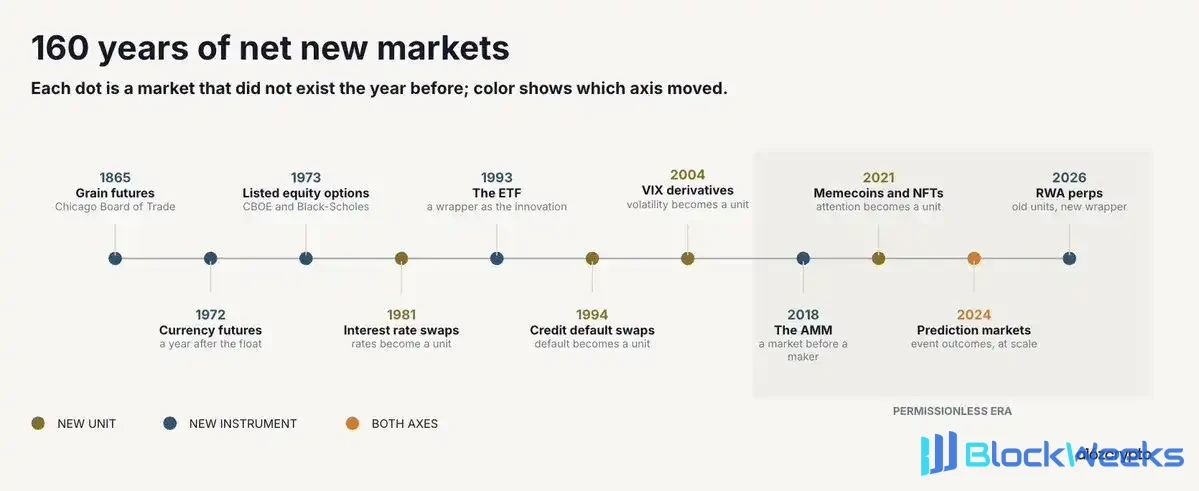
a16z Crypto investment partner Robbie Petersen argues that throughout financial history, new markets have been constrained by supply rather than demand—limited by listing committees, legal frameworks, and geographic fragmentation. Blockchain removes these barriers through permissionless issuance and global distribution, allowing supply to finally catch up with worldwide demand. Using perpetual futures (perps) as a central case study, he contends that perps reduce listing constraints to just two factors—oracles and counterparties—making them one of the most efficient coordination mechanisms ever devised, and calls Hyperliquid the closest thing to a global financial coordination platform. The article also notes that on-chain RWA perps generate $1.4 trillion in annualized trading volume, accounting for half of Hyperliquid's order book, and predicts that new risk units such as compute futures and CPI will continue to emerge.
 HYPEHyperliquidPermissionless MarketsOn-Chain Derivatives
2026-10-01

a16z: Perpetual Futures Are Just the Beginning — Any Risk Can Become a Tradable Asset
a16z crypto argues that crypto's real disruption lies on the supply side of markets: blockchains enable permissionless issuance and global distribution, eliminating listing committees and geographic fragmentation. Perpetual futures exemplify this — their synthetic nature reduces listing constraints to oracles and counterparties, and Hyperliquid's HIP-3/HIP-4 lets users issue their own derivatives. On-chain RWA perpetuals hit $1.4T in annualized volume in July, half of Hyperliquid's book. The authors see 24/7 on-chain trading becoming a price-discovery wedge, with compute futures, CPI perpetuals, and other novel risk instruments on the horizon.
HYPEHyperliquidPermissionless IssuanceOn-Chain Derivatives2026-10-01
Dogecoin (DOGE) Reaches Major Milestone with DogeOS Launch
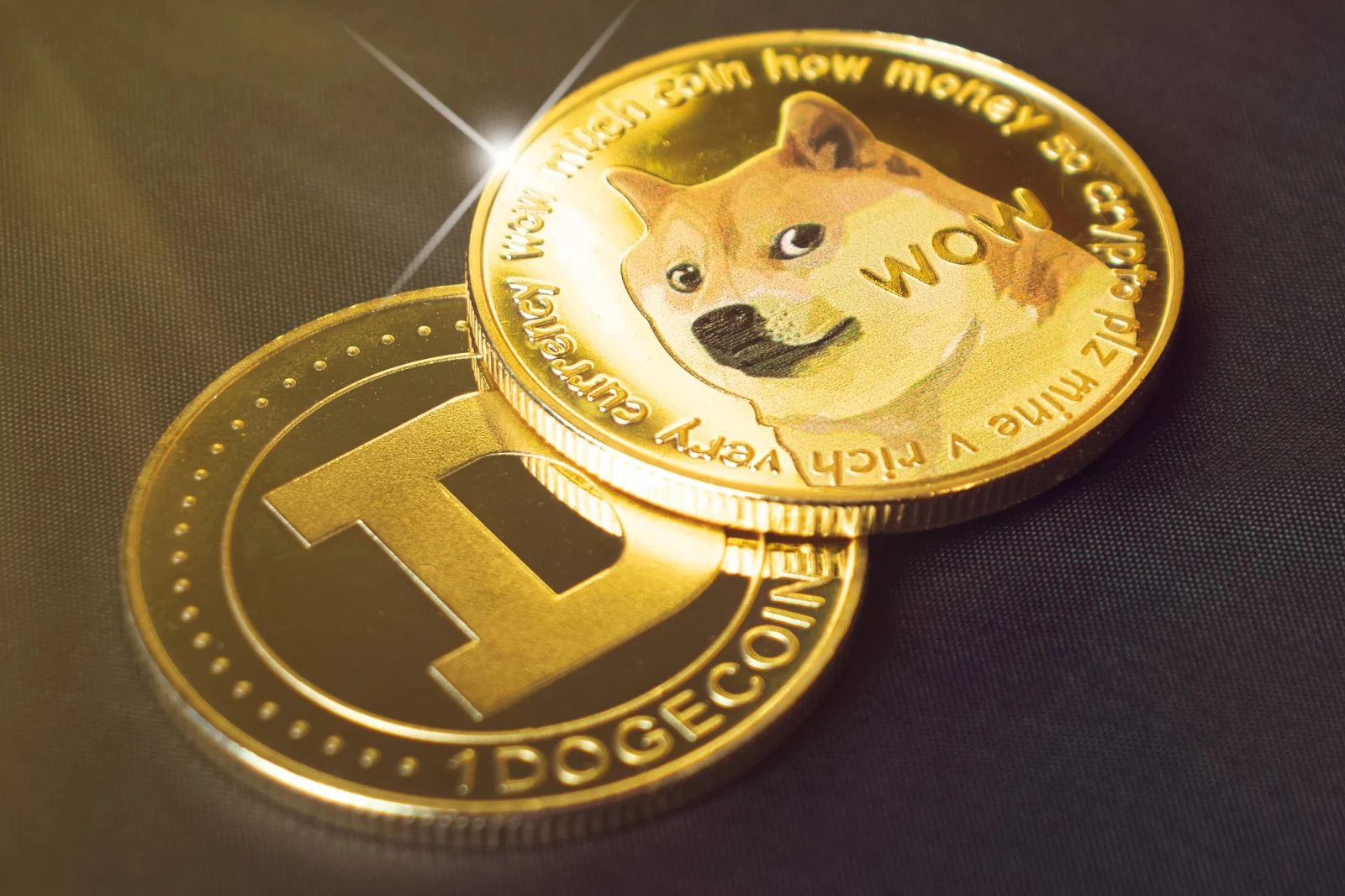
The official Dogecoin community has announced the launch of the DogeOS Chikyū public testnet, an EVM-compatible Layer 2 application layer built by the MyDoge wallet team using ZK-Rollup technology. The network boosts Dogecoin's main chain throughput from roughly 30 TPS to about 300 TPS while preserving main chain security. DogeOS will not issue a separate token—DOGE remains the sole native gas token for transaction fees and smart contract deployment. The project previously raised $6.9 million in seed funding led by Polychain Capital, aiming to bring long-held DOGE into on-chain DeFi.
 DOGEZK-RollupDogecoinLayer2
2026-09-30

Can Ethena's Price Hit $2 by 2028?
Standard Chartered has initiated coverage on Ethena's ENA token with a $2 year-end 2028 target, implying roughly 700% upside from its ~$0.25 price on September 30. The bank argues Ethena spans three major markets—stablecoins, perpetuals, and tokenization—with its synthetic dollar USDe expanding beyond crypto basis trades into institutional credit, tokenized equities, and traditional credit assets. It also expects an ENA buyback tied to protocol revenue to help the token better capture business growth.
 ENAStandard CharteredUSDeENA
2026-09-30

RWA Perpetuals Hit $1.4T: Why Trading Is Exploding
This article examines the rapid growth of RWA perpetuals, noting that on-chain annualized trading volume reached roughly $1.4 trillion by July 2026. The author stresses this figure represents annualized trading volume, not total RWA value locked or actual tokenized assets. Unlike security tokenization, which requires custody, shareholder rights, and compliance structures, perpetuals only need reliable pricing, collateral, liquidity, and a liquidation engine. Platforms like Hyperliquid have lowered barriers to launching new markets through the HIP-3 framework. The article argues that derivatives are bringing traditional market exposure on-chain far faster than the migration of legal ownership.
2026-09-30

YZi Labs Investor: Three Startup Opportunities in Tokenized Stocks
YZi Labs investor RickyW breaks down how tokenized stocks work and where the startup opportunities lie. He explains the structure: underlying shares are held by custodians, and what the token represents depends on the issuance model, covering minting, distribution, arbitrage, and redemption. In his view, on-chain stocks lower investment barriers via stablecoins, let developers reuse infrastructure, enable transferable and collateralizable holdings, and support 24/7 settlement. He outlines three startup directions: user-facing portfolio products, cross-provider operational software, and stock-token collateral infrastructure.
 USDCTokenized StocksStartup OpportunitiesOn-chain Securities
2026-09-30

How U Is Catching Up: Winning with High Yields, Broad Use Cases, and Strong Compliance
This article explores how United Stables (U), an emerging stablecoin, is breaking through with high yields, diverse use cases, and strong compliance. U's circulating supply has surpassed $1.38 billion with over 81,600 holders. The article covers three areas: yields, including a flexible savings product with Binance offering up to 6.63% APR, on-chain yields reaching 11%, and VIP rates up to 7.7%; use cases, with deep integration into Binance campaigns, PancakeSwap, ListaDAO, JustLend DAO, plus Robinhood Chain deposit/withdrawal support and a Kraken listing; and security, featuring Chainlink Proof of Reserve for real-time on-chain verification. The article argues that stablecoin competition is shifting from issuance volume to overall experience and distribution efficiency.
 USDTBinance EcosystemDeFi IntegrationYield & Savings
2026-09-29

D3 Offers Priority Access to New Domains Through Solana and Hyperliquid Vaults
D3 launched its Frontier program at Korea Blockchain Week, letting users deposit eligible assets into Solana and Hyperliquid vaults to earn Frontier Points for priority access before new domains open for registration. The Solana vault is powered by Loopscale, while the Hyperliquid vault is backed by Hyperion DeFi and Upshift. Priority access does not equal domain ownership, as registries set their own timing and eligibility rules, and new domain suffixes must still win ICANN approval. D3 says it will expand to other chains in the coming months, with over 20 applicants and registries already committed.
 SOLHyperliquid vaultDoma ProtocolSolana vault
2026-09-28
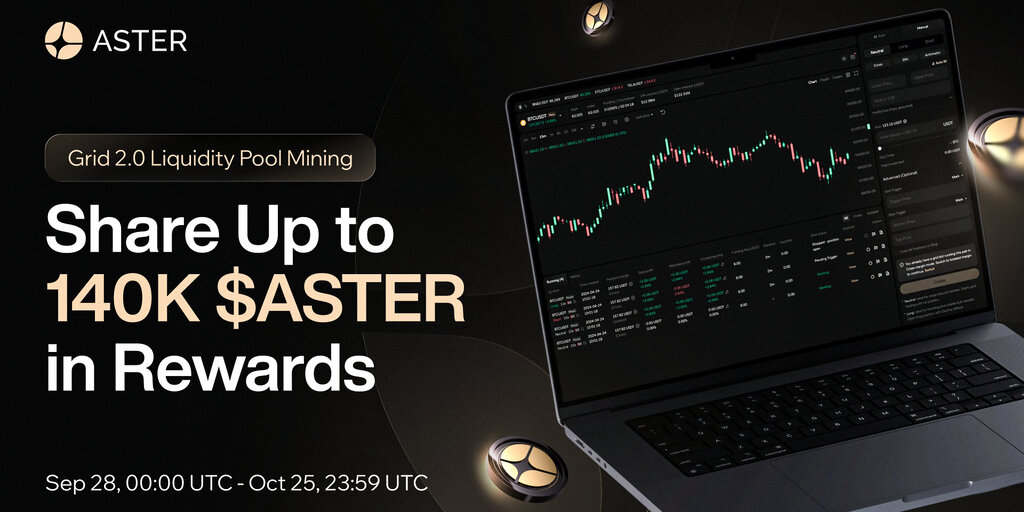
Aster Launches Perpetual Grid Trading 2.0 with Up to 140,000 $ASTER Liquidity Mining Campaign
Aster has rolled out a liquidity pool mining campaign to mark the launch of Perpetual Grid Trading 2.0. Running for four weeks from September 28 to October 25, 2026, the campaign offers a total reward pool of up to 140,000 $ASTER to users running perpetual grid strategies on eligible trading pairs. Rewards are distributed hourly based on each user's share of grid trading volume, with a base pool of 10,000 $ASTER per cycle. Grid 2.0 lets grid strategies run through dedicated sub-accounts, separate from manual perpetual trading, and supports both cross and isolated margin, with up to 50 independent grid strategies per account under isolated margin. A Grid Marketplace also lets users browse, copy, or reverse existing strategies.
 ASTERPerpetual Grid Tradingautomated tradingLiquidity Mining
2026-09-28